Tenancy agreement: how to write one that protects landlords
A step-by-step guide to drafting a tenancy agreement that’s enforceable, compliant, and reduces disputes from day one.
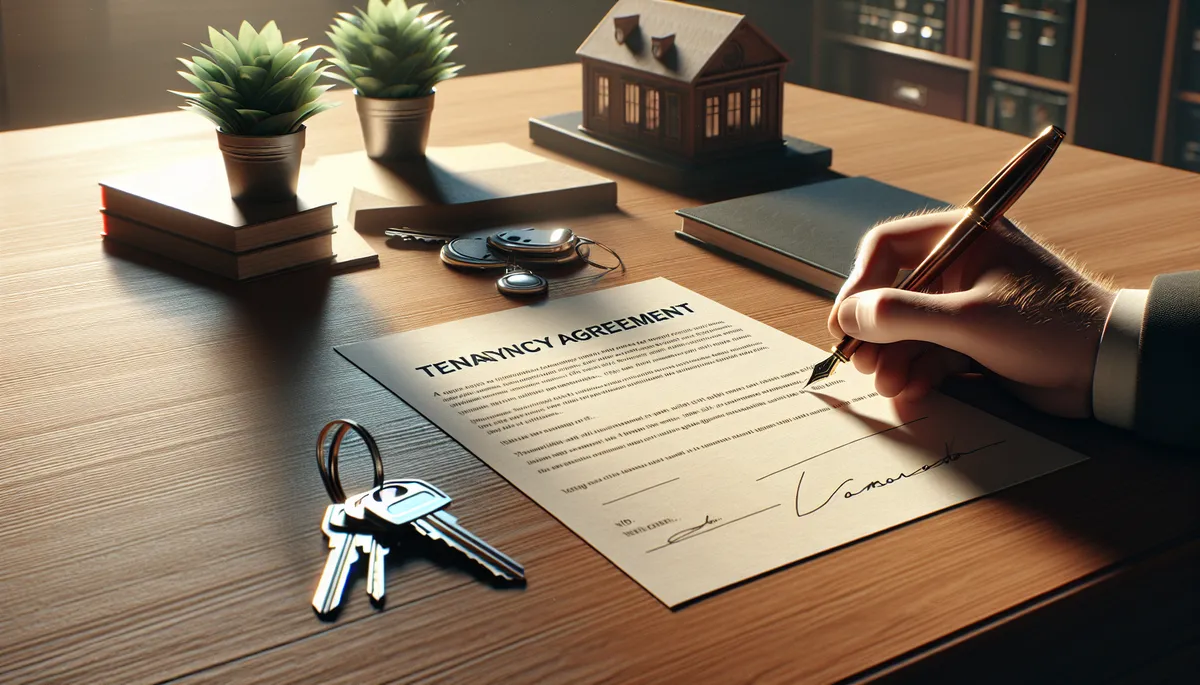
A well-written tenancy agreement is your first line of defence as a landlord. It sets expectations, reduces disputes, and gives you clear contractual routes when rent is late, damage occurs, or the tenancy ends. For the wider legal framework it sits inside — deposits, notices and tenant rights — see our guide to UK tenancy law.
Automated property management for UK landlords & property managers
3 months free — no agent fees
What you’ll achieve by the end
By the end of this guide, you’ll have a tenancy agreement that:
- Clearly identifies the parties, property and term
- Includes enforceable clauses that protect your income and asset
- Aligns with key legal requirements in England (and flags where rules differ)
- Minimises common arguments about repairs, access, pets, bills and deposits
Prerequisites: what you’ll need before you start
Get these basics right first, or your agreement will be vague (and harder to enforce).
- The correct tenancy type. Since the Renters’ Rights Act 2025 came into force on 1 May 2026, new private lets in England are periodic assured tenancies — no new Assured Shorthold Tenancies (ASTs) or fixed terms can be granted, and existing tenancies have converted to this model.
- Full names and contact details for:
- All tenants (and permitted occupiers)
- The landlord (or agent) and an address for notices (section 48, Landlord and Tenant Act 1987)
- Property details: full address, included parking/storage, any shared areas
- Start date, fixed term length, rent amount, rent due date
- Deposit amount (if any) and chosen deposit scheme
- Your policy decisions (so you can draft consistently): pets, smoking, decorating, subletting, sharers, garden responsibility
Warning: If you’re letting in Scotland, Wales or Northern Ireland, tenancy types and mandatory terms differ (e.g. Scotland’s Private Residential Tenancy). Use the correct local template.
Step-by-step: write a tenancy agreement that protects you
1) Confirm the tenancy type and who is legally bound
Action:
- State the tenancy type. For new lets in England this is a periodic assured tenancy — since 1 May 2026 you cannot grant a fixed term or a new Assured Shorthold Tenancy.
- List every adult tenant as a joint tenant.
- List any permitted occupiers (who can live there but aren’t tenants).
Tips:
- Use joint and several liability wording for joint tenants. That means each tenant is responsible for all rent and breaches, not just “their share”.
- If one person isn’t named as a tenant, you can’t enforce key obligations against them.
Warnings:
- Don’t accidentally create a licence when you intend a tenancy (or vice versa). Exclusive possession + rent + term usually indicates a tenancy.
2) Define the rent, how it’s paid, and what happens if it’s late
Action:
- Specify the rent amount, payment method, and due date.
- State whether rent includes any bills (usually it shouldn’t unless you run an HMO with inclusive rent).
- Add a clear arrears process: reminders, formal notice, and escalation.
Include in your clause:
- When rent is “late” (e.g. the day after the due date)
- Any interest on arrears (must be reasonable and clearly stated)
- Returned payment fees (if charged, keep them proportionate)
Note: since 1 May 2026, rent increases must use the statutory Section 13 (Form 4A) process — once a year — so don’t rely on rent-review clauses that try to raise rent more often or by another method.
Tips:
- Put the rent date on a consistent day (e.g. 1st of the month). It simplifies accounting and arrears chasing.
Warnings:
- Don’t rely on “verbal agreements” about partial payments or changing dates. If you agree a change, put it in writing.
3) Handle the deposit properly (and write the clause to match your process)
Action:
- State the deposit amount and what it can be used for (rent arrears, damage, missing items, cleaning where appropriate).
- Confirm you will protect it in a government-approved scheme and provide the required information.
Key legal requirement (England & Wales):
- Deposits for ASTs must be protected within 30 days of receipt and you must serve the scheme’s Prescribed Information within 30 days.
Tips:
- Attach (or reference) the inventory and schedule of condition as a tenancy document. Deposit disputes are won and lost on evidence.
Warnings:
- If you fail deposit compliance, you can face financial penalties (the tenant can claim 1–3x the deposit). Note that Section 21 “no-fault” evictions were abolished on 1 May 2026, so possession is now obtained only through the Section 8 grounds.
4) Set out repairs, maintenance and reporting — with clear boundaries
Action:
- Include the tenant’s day-to-day obligations (keep reasonably clean, ventilate, report issues promptly).
- Confirm your statutory repairing duties.
What the law says (core duty):
- Under section 11, Landlord and Tenant Act 1985, you must keep in repair:
- The structure and exterior
- Installations for water, gas, electricity, sanitation
- Space heating and hot water
Practical clause points to add:
- How tenants report repairs (email/portal), and what counts as an emergency
- Timeframes for access and appointments
- Tenant responsibilities for avoidable damage (e.g. blocked drains from wipes, misuse)
Tips:
- Add a simple “report it quickly” requirement. Delayed reporting often turns a £50 fix into a £500 job.
Warnings:
- Don’t write clauses that try to contract out of section 11 obligations. They won’t be enforceable.
5) Control alterations, decoration, and use of the property
Action:
- Prohibit structural alterations without written consent.
- Set clear rules on painting, picture hooks, TV mounts, flooring changes.
- Define permitted use: residential only, no business use that causes nuisance or invalidates insurance.
Common protective wording:
- “No redecoration without the landlord’s prior written consent”
- “No drilling into tiles or external walls”
- “No satellite dishes without consent and required permissions”
Tips:
- If you’re happy with small changes, say so (e.g. “reasonable picture hooks permitted”). It reduces petty disputes.
Warnings:
- If your leasehold (or building rules) restrict alterations, your tenancy agreement should mirror those restrictions.
6) Write enforceable rules on pets, smoking, and nuisance
Action:
- Note that since 1 May 2026 tenants have an implied right to request a pet, and you cannot unreasonably refuse — a blanket “no pets” clause is no longer enforceable. Write your policy around reasonable conditions, not an outright ban.
- If pets are allowed (or requested), set conditions.
Useful pet conditions:
- Tenant remains liable for flea treatment, damage, and extra cleaning
- Requirement to comply with building rules (blocks often restrict animals)
- Written consent required for any additional/replacement pet
Nuisance clause essentials:
- No excessive noise, anti-social behaviour, harassment, or illegal activity
- Responsibility for guests’ behaviour
Tips:
- “No smoking inside” is straightforward and easy to evidence with inspections.
Warnings:
- Avoid blanket clauses that are discriminatory. Keep rules linked to property protection, safety, and neighbours’ rights.
7) Get access and inspections right (without overreaching)
Action:
- Include a clause allowing access for repairs, safety checks and inspections.
- State the notice period for routine access.
Best practice:
- Routine inspections: give at least 24 hours’ notice and obtain consent.
- Emergency access: define what counts as an emergency (fire, flood, gas leak).
Tips:
- Schedule inspections (e.g. at 3 months, then every 6 months). It keeps standards up and surprises down.
Warnings:
- Tenants have a right to “quiet enjoyment”. A tenancy agreement can’t give you unlimited access.
8) Nail the end-of-tenancy terms: notice, cleaning, keys, and move-out
Action:
- Set out how notice must be served (email/post) and to which addresses.
- Define check-out standards and the process for deductions.
- Include key return rules and charges for lost keys (reasonable, evidenced costs).
Include a clear move-out checklist:
- Remove all belongings
- Return all keys/fobs
- Leave the property in a clean condition (matching check-in standard)
- Provide forwarding address and meter readings
Tips:
- Reference the inventory and require attendance at check-out where possible.
Warnings:
- Be careful with “professional cleaning required” clauses. They are often challenged as unfair if they go beyond returning the property to the same standard as at check-in.
Common variations and alternatives (choose what fits your let)
Not every tenancy agreement is the same. The structure is similar, but clauses should match the property and tenant type.
- Fixed term vs periodic: fixed term gives initial certainty; periodic offers flexibility but needs tight notice/admin.
- Guarantor deed: useful for students, low credit scores, or first-time renters. Use a proper deed of guarantee (not a casual paragraph) and reference the tenancy.
- HMO clauses (where applicable): add waste rules, cleaning responsibilities for shared areas, and stricter guest policies.
- Bills included: if you include utilities, set fair-use limits and specify what happens if usage is excessive.
Troubleshooting: common issues landlords hit (and how to fix them)
“My tenant says the clause isn’t valid.”
- Check if it conflicts with statute (e.g. repairs) or is unfair/unclear.
- Rewrite in plain English with specific behaviours and outcomes.
“I can’t prove damage or cleaning.”
- Your agreement should reference a signed inventory and dated photos.
- Without evidence, deposit deductions are difficult to defend.
“Rent arrears are building but the agreement is vague.”
- Add a rent schedule, arrears communications process, and clear payment method.
- Keep records of all reminders and payment plans.
“I used a template and it doesn’t match my property.”
- Update annexes: parking space number, appliance list, bin day rules, alarm instructions.
- Remove irrelevant clauses (they create arguments).
“The tenant won’t allow access.”
- Ensure your clause specifies notice and purpose.
- Offer reasonable dates/times and keep communications in writing.
Streamlining drafting and day-to-day compliance with AI
Once your tenancy agreement is signed, the real work starts: chasing documents, logging repair reports, arranging access, and keeping an audit trail. Abodient's AI property manager helps by automating tenant communication, triaging maintenance requests, and keeping clear records of what was reported and when—exactly the kind of evidence that supports the obligations set out in your agreement.
Frequently Asked Questions
Do I need a solicitor to write a tenancy agreement?
No, but you do need a professionally drafted, up-to-date agreement that matches your jurisdiction and property type. If you’re using guarantors, HMOs, or complex clauses, legal review is a sensible safeguard.
What are the most important clauses to protect a landlord?
Focus on rent and arrears, deposit and inventory, repairs/reporting, access, use/alterations, and end-of-tenancy obligations. These are the areas where disputes most commonly arise.
Can I write “no pets” in a tenancy agreement?
Not a blanket ban. Since 1 May 2026 tenants have an implied right to request a pet and you can’t unreasonably refuse. You can require a written request and set reasonable conditions covering damage, cleaning, and compliance with building rules, but a flat “no pets” clause is no longer enforceable.
Can a tenancy agreement override my legal repair duties?
No. Your statutory obligations (notably section 11, Landlord and Tenant Act 1985) apply regardless of what a contract says.
Should I include a professional cleaning clause?
Avoid rigid wording. It’s safer to require the tenant to return the property clean and in the same condition as at check-in (allowing for fair wear and tear), supported by an inventory.
A strong tenancy agreement is specific, readable, and backed by evidence. Get the foundations right, write clauses you can actually enforce, and you’ll prevent most problems before they start. Once you’ve drafted yours, run it through our free tenancy agreement checker to catch weak or unenforceable clauses.