
Abodient Blog
Insights, expert advice, and practical guides on automated property management and the UK rental market.

What counts as qualifying income for Making Tax Digital, and what does not?
Making Tax Digital for Income Tax is UK-wide: it applies across England, Wales, Scotland and Northern Ireland, not as a devolved landlord rule. The practical threshold test is narrower than total taxable income, because it focuses on self-employment and property income.
When does Making Tax Digital start for landlords, and what do you have to send HMRC?
Making Tax Digital for Income Tax applies across the United Kingdom, so landlords in England, Wales, Scotland and Northern Ireland use the same MTD start dates and quarterly-update rules. The main trap is that several landlord guides still describe the 2026 rules imprecisely; the 2026 Regulations and HMRC guidance now govern.
Which landlords have to use Making Tax Digital, and from when?
In England, Wales, Scotland and Northern Ireland, Making Tax Digital for Income Tax is a UK-wide HMRC income-tax reporting regime, not a housing-law rule. The key test for landlords is qualifying income from property and self-employment, not the number of properties owned.
Best software for student lets
In England, student-let software is mostly a product-fit question rather than a special legal category, because the practical problem is managing rooms, tenancy periods, deposits, rent and guarantor paperwork across a high-turnover academic cycle. UK-wide tax rules also matter where landlord income brings Making Tax Digital into play.
Best software for serviced accommodation and short lets
In England, Wales, Scotland and Northern Ireland, serviced-accommodation software is mainly a market choice, while the hard legal software driver is UK-wide Making Tax Digital for Income Tax. The strongest answer is to separate booking operations, “free” marketing claims and tax compliance instead of treating one app as automatically best.
Best HMO management software for UK landlords
In England, and for UK landlords where the cited rules are UK-wide, best HMO management software is a practical choice rather than a legal status. No UK law certifies one product as the best, so the useful comparison is whether the software handles HMO-specific records, compliance dates, tenancy detail and tax obligations.
Best software for commercial landlords
In England, and across the UK where tax, data-protection and consumer-marketing rules apply nationally, commercial landlord software is mainly a fit-and-cost decision rather than a legal label. The only hard software mandate is Making Tax Digital for Income Tax for landlords who are within HMRC’s threshold.
Best software for a self-managing RMC or residents' association
In England, there is no statutory best block-management platform: the right choice is a practical fit for the work the directors must control. For service-charge trust money, the legal position below is for England & Wales; the Section 20 threshold discussed is England-only.
Best property management software for managing agents: client reporting and statements
In England, no law requires a managing agent to use a particular property management software, CRM or AI tool; the choice is a market and accounting-control decision. The legal pressure is indirect where an English letting or property management agent holds client money, because “A property agent who holds client money must be a member of an approved or designated client money protection scheme.”
Best client accounting software for letting agents
In England, client-money compliance for letting and property management agents is driven by client money protection membership and reconcilable records, not by any law naming a best software product. UK-wide tax rules may make software necessary for some landlords, but that is a separate HMRC Making Tax Digital issue, not a letting-agent client-accounting rule.
Best software for a small letting agency
In England, no law names the best letting agency software or makes a CRM compulsory. The choice is market-led: a small agency should pick the tool that reduces missed follow-up, compliance slips, client-money risk and reporting work.
Best MTD software for landlords by price, and the cheapest compliant option
Making Tax Digital for Income Tax is a UK-wide HMRC duty for qualifying landlords, not an England-only tenancy rule. Tenant portals, rent-tracking tools and tenancy-management features are market choices, not legal requirements for MTD compliance.
Best accounting software for landlords: Self Assessment, SA105 and rental income
For UK landlords, the tax rules here are UK-wide because Self Assessment, Income Tax and Making Tax Digital for Income Tax are HMRC rules for England, Wales, Scotland and Northern Ireland. The practical choice is not the prettiest bookkeeping app, but whether it records rental income and expenses clearly enough for Self Assessment and, where required, works with Making Tax Digital.
Best block management software for small blocks and RMCs
In England, small blocks and RMCs should choose software around service-charge control, leaseholder records and consultation tracking, not around landlord rent software features. The legal points below are mainly England and Wales, with the £250 Section 20 qualifying-works trigger stated separately because it is England-only.
Best property management software for small landlords
In the UK, most answers about the best property management software for small landlords are market answers, not legal answers. The legal issue appears only where rules such as Making Tax Digital for Income Tax or advertising law affect whether a landlord can rely on spreadsheets or whether a product can fairly be called free.
Best automated rent tracking software for UK landlords
In the UK, automated rent tracking is a software market choice, not a legal status or a statutory requirement. In England and the rest of the UK, the practical distinction is whether the product imports and reconciles bank transactions automatically, rather than only letting a landlord type rent in manually.
How much does property management software cost in the UK?
In England, and across the wider UK market, property management software pricing is a supplier-pricing question rather than a statutory fee. The real comparison is between permanent free tiers, capped freemium plans, per-property subscriptions and per-user CRM pricing.
Best repairs and maintenance software for UK landlords
In England, repairs and maintenance software is a product-choice question first and a legal question only at the edges. UK landlords should separate repair reporting, work-order tracking, contractor coordination, tenant portals and tax software, because the best tool for one job is often not the best tool for another.
Best compliance tracking software for UK landlords
In England, landlord compliance software is a market category rather than a statutory product: the legal duties come from housing, tax and safety rules, while software helps track them. The same distinction matters across Wales and Scotland where the product or legal rule expressly covers those jurisdictions.
What fire alarm system does an HMO need, and how often does it have to be tested?
Across England, Wales, Scotland and Northern Ireland, HMO fire-alarm duties are not a single UK-wide Grade A or Grade D rule. The legal answer is split by nation, and the common mistake is treating guidance, British Standards or council licence practice as if it were the statute.
What rights do freeholders have over leaseholders, and can they refuse a pet?
In England and Wales, a freeholder’s power over a leaseholder comes mainly from the lease, not from ordinary ownership of someone else’s home. Scotland and Northern Ireland differ in important ways, so each answer below states the England-and-Wales position and adds the limited cross-border point where it matters.
Specialist property management software: block, commercial, enterprise and compliance
In England, no regulator ranks property management software, so the best choice is usually the product that fits the asset class, portfolio size and compliance risk. The legal duties sit around client money, service charges, safety checks, records and tax software compatibility, not around any named property platform.
How to build and scale a property portfolio
In England, a property portfolio is built by buying or controlling rental homes one at a time, then scaling only when the tax, finance and compliance costs still leave a margin. The same strategy changes across the UK because England and Northern Ireland use SDLT, Scotland uses LBTT with ADS, and Wales uses LTT.
How much extra stamp duty do you pay on a buy-to-let or second home?
In England and Northern Ireland, SDLT is the stamp duty system for residential purchases; Scotland uses LBTT with ADS, and Wales uses LTT higher rates. The key mistake is treating the second-home charge as a separate flat tax rather than an uplift on the relevant rate table.
Is a guarantor liable for rent, and for how long?
Across the UK, a guarantor’s liability is mainly contractual, but England, Wales, Scotland and Northern Ireland differ on death, writing, witnessing, joint liability and limitation. The safest reading is always the signed guarantee first, then the national rules that decide whether that promise can be enforced.
Renting out a room in your house: the rules for taking in a lodger
In England, Wales, Scotland and Northern Ireland, renting out a room in the home you live in is usually lawful, but the label “lodger” depends on sharing, residence, tax and HMO rules rather than on what you call the agreement. The biggest differences between the four nations are registration, HMO thresholds, absence tests and whether the arrangement falls outside the main private-tenancy regime.
Can a landlord still say no to pets under the Renters' Rights Act?
In England, the Renters’ Rights Act pet-request right has applied since 1 May 2026 to private assured tenancies, not social housing assured tenancies. Wales has no statutory pet right and treats pet clauses as ordinary contract terms; Scotland has passed a pet-request right but has not brought it into force; Northern Ireland has no equivalent pet-request law.
Is an EPC a legal requirement, and how do you get one?
In England and Wales, an EPC is both a marketing document and a letting document: it has to be commissioned before marketing and given to the tenant free of charge. The rules below do not cover Scotland or Northern Ireland, which run separate regimes.
Holding deposit rules: how much, how long, and when you can keep it
In England, a holding deposit is a capped pre-tenancy reservation payment, with similar but separate rules in Wales. Scotland’s verdict is different: a holding deposit is an unlawful premium for a private residential tenancy; Northern Ireland has no statutory holding-deposit regime, so the terms depend on the bargain made.
What counts as fair wear and tear in a rented property?
In England, Wales, Scotland and Northern Ireland, fair wear and tear is a deposit and repair-liability question, not a fixed statutory table. The practical answer is whether the change came from normal everyday use and time, or from damage, neglect, misuse, poor cleaning or an avoidable failure to report a problem.
Can you let out, sublet or Airbnb a leasehold flat?
In England and Wales, a leasehold flat can usually be let only if the lease permits it or the required consent is obtained; the lease wording matters more than the word subletting itself. Scotland and Northern Ireland have different long-lease systems, so this article flags those differences where they change the answer.
Can you sell a house with a tenant in situ, and what does the buyer inherit?
In England, a sale does not by itself end a tenancy: the buyer takes the property subject to the tenant’s rights unless vacant possession is obtained first. Wales, Scotland and Northern Ireland use different tenancy systems, so the nation matters on notice and eviction, even though a tenanted sale is possible in each.
Who is responsible for repairs in a leasehold flat?
In England and Wales, responsibility for repairs in a leasehold flat is usually decided by the lease, not by a general statute. Scotland is different because most ultra-long residential leases converted to ownership, and Northern Ireland leasehold flats are often discussed through Housing Executive or private-tenancy rules rather than the England-and-Wales freeholder model.
Share of freehold or leasehold: which is better for a flat?
In England and Wales, a share of freehold is usually still a leasehold flat plus a stake in the freehold-owning company or title. The practical choice is not freehold versus leasehold in the abstract, but lease length, ground rent, service-charge control, management quality and saleability.
Do you need planning permission to turn a house into an HMO?
Planning permission for an HMO depends on the UK nation, the number of occupiers, and whether permitted development rights have been removed. In England the small-HMO answer can be no, but Wales, Scotland and Northern Ireland do not follow the same simple C3-to-C4 route.
How much can a landlord increase the rent, and how often?
In England, Wales, Scotland and Northern Ireland, private-rent increase rules are different, and England changed materially on 1 May 2026. The practical answer is not just the percentage: it is the notice route, the timing gate, and whether a tribunal or committee can reset the figure.
What does HMO insurance cover, and do you need it?
UK-wide, HMO insurance is less a single compulsory product than a disclosure and licence-condition issue. The important split is between ordinary home insurance, landlord insurance that accepts HMOs, and local or Northern Ireland licence conditions that require buildings cover.
What is a Section 20 consultation, and how does the process work?
In England and Wales, Section 20 is mainly a service-charge recovery cap: consultation is the route that lets the landlord recover more than the statutory limit. Scotland uses title deeds or the Tenement Management Scheme for communal tenement decisions, and Northern Ireland has no equivalent Landlord and Tenant Act 1985 Section 20 regime.
Guaranteed rent schemes: how they work, and whether they are worth it
In England, a guaranteed rent scheme is a commercial arrangement, not a statutory product, so the label matters less than whether the owner has granted a lease, appointed an agent, or accepted a rent-guarantee promise. Wales, Scotland and Northern Ireland use different tenancy tests, but the same practical question comes first: who is legally taking the property from the owner, and who is then responsible to the occupier?
Returning a tenancy deposit: what you can deduct, and how disputes are decided
In England, Wales, Scotland and Northern Ireland, a tenancy deposit is security for the tenant’s obligations and liabilities, not a bonus payment the landlord can keep. The practical test is evidence: rent arrears, damage, cleaning, gardening, missing items and unpaid bills can be claimed only to the extent the tenancy or contract makes the tenant responsible and the loss is proved.
Do landlords have to protect a tenancy deposit?
In England, Wales, Scotland and Northern Ireland, deposit protection is compulsory when the relevant tenancy-deposit rules apply, but the deadline and scheme rules differ by nation. The core question is not whether the money is called a deposit, but whether it is taken as security for the tenant’s obligations.
Letting a UK property while you live abroad: the Non-Resident Landlord Scheme, and how to be paid gross
In England, you can let a UK property while living abroad, but the tax withholding rules are UK-wide and sit alongside each nation’s landlord-registration, tenancy-address and licensing rules. The Non-Resident Landlord Scheme is not an overseas landlord tax exemption; it is mainly a mechanism for paying rent gross instead of having basic-rate tax withheld.
How much does landlord insurance cost, and why has it gone up?
In the UK, landlord insurance pricing is set by insurers rather than statute, but tax, claims inflation, flood risk and lender requirements all affect what landlords pay. The figures below are UK-wide unless the England-only Section 21 point is stated separately.
What does landlord insurance cover, and is it a legal requirement?
In England, landlord insurance is a private insurance product rather than a single statutory package, so cover depends on the policy wording and add-ons bought. The legal answer is different from the mortgage and commercial answer: the law may not force the product, but a lender, agent, lease or risk position often makes cover practically necessary.
Do tenants have to allow viewings? Running them while someone is still living there
In England, a tenant’s home is still their home while it is being marketed, so viewings depend on agreement, not just the landlord’s timetable. The practical answer is to pre-screen fairly, ask early, and treat access as something to arrange rather than enforce at the door.
Facing repossession on a buy-to-let: the notice, the court order, and the shortfall
In England and Wales, buy-to-let repossession is usually a court-and-enforcement problem rather than a fixed arrears-count problem. The key questions are notice, whether the borrower is still in occupation, whether the lender has exhausted alternatives, and what account is given after sale.
Can someone with power of attorney sell a property?
In England and Wales, a registered property and financial affairs LPA is usually the authority used to sell a donor’s property, but Scotland and Northern Ireland have different registration and supervision rules. The practical answer depends on the power document, the type of ownership, and whether the transaction is a normal sale, a gift, an undervalue transfer, or a conflicted sale.
How often does a landlord have to replace a carpet, kitchen or blinds?
In England, Wales, Scotland and Northern Ireland, carpets, kitchens and blinds are judged by condition, safety and repair duties, not by a statutory replacement timetable. The practical answer is therefore different from the myth: there is no fixed landlord carpet replacement law in the UK, but worn or unsafe items can still have to be repaired or replaced.
Is end-of-tenancy cleaning a legal requirement, and what can a landlord deduct?
In England, Wales and Scotland, the legal test is not whether an end-of-tenancy clean was professional, but whether the tenant returned the property to the condition required by the tenancy, allowing for fair wear and tear. Northern Ireland is different on fees: there is no equivalent statutory ban on requiring a professional-clean payment, though deposit-scheme guidance advises against insisting on one.
Tax on rental income during probate, and capital gains when the estate sells
In England, estate rental income and estate CGT are dealt with by the personal representatives, not by treating the property as if it still belonged to the deceased. The income-tax and CGT rules are UK-wide in substance, but the legal end of the administration period is clearer in Scotland than in England, Wales and Northern Ireland.
How to get rid of an estate rentcharge: deed of variation, redemption and indemnity policies
In England and Wales, an estate rentcharge is hardest to remove because it is the type of rentcharge the 1977 Act deliberately left alive for estate-service funding. The practical routes are a lender-acceptable deed of variation, a privately agreed deed of release, or insurance where the lender will accept it.
Can you evict a tenant if you buy a house with them already in it?
In England, buying a tenanted property now means buying both the asset and the statutory possession rules attached to it. The practical question is no longer just “can I evict?”, but which ground applies, how long it takes, and whether the price and finance still make sense.
Assured periodic tenancy agreement templates: where to get one, free or paid
In England, new private assured lettings now use assured periodic tenancies rather than ASTs. The practical question is not just “PDF or Word”, but whether the template matches the nation and the post-1-May-2026 tenancy regime.
AI property management software: how UK landlords use it, and which tools are worth it
For UK landlords, including in England, AI property management software is now mainly about admin, compliance, maintenance triage and decision support rather than replacing the landlord. The legal line matters most where AI affects people, especially tenant screening, referencing, pricing and complaints.
Letting agency fee models: let-only or full management, percentage or flat, and rent due or rent collected
In England, letting-agency fee models are mostly commercial choices, but the service level, fee calculation and VAT-inclusive price must be made clear before the landlord is committed. Scotland diverges most sharply on agent regulation because specified letting-agency people need an SCQF-level qualification, while Wales has a fee-publicity duty and Northern Ireland has its own five-year electrical-safety interval.
Property owners' liability insurance: how much cover do you need, and is it the same as public liability?
In England, landlords usually meet property owners’ liability through the insurance market rather than a statute that names the product. The legal-duty point below is England and Wales; the buying, lender and cover-limit points are UK-wide market practice rather than statutory rules.
Can you buy a house at auction with a mortgage?
In England and Wales, buying an auction house is mainly a timing problem: the contract is usually made immediately, the deposit is payable straight away, and completion follows quickly. The legal rules below are for England and Wales unless a sentence names another jurisdiction.
Client accounts for letting agents: pooled or designated, and what to do when the bank closes one
In England, the statutory backbone is client money protection scheme membership and proper client-money records, not a legal choice between pooled and landlord-by-landlord accounts. Scotland, Wales and Northern Ireland diverge sharply, so a UK letting agent should treat the bank account structure as an operational and scheme-compliance issue, not a single UK statutory template.
Onboarding a large portfolio: getting a hundred properties compliance-checked without stalling the switch
In England, the switch-over problem is operational rather than legal: the Renters’ Rights Act 2025 tenancy conversion happens without waiting for a portfolio compliance audit. The priority is to keep lettings live while triaging certificates, registration readiness and penalty exposure.
Can your insurer refuse to pay out, and what can you do about it?
In England and across the UK, an insurer can reject a claim only where the policy, the facts and insurance law allow it. The practical route is usually evidence first, formal complaint second, and the Financial Ombudsman Service or court only if the insurer still will not move.
Flats or houses for buy-to-let, and one big let or several small ones
In England, the right buy-to-let structure is usually decided by tax, finance, service-charge risk and tenant demand rather than by a rule that ranks flats above houses. Across the UK, flats often win on yield, while houses often win on control and exit flexibility.
Service occupancy: when an employee living in your property is not a tenant
In England, the core question is whether the home is occupied because the job requires it, not whether the worker has keys, pays something, or appears to have exclusive possession. Wales, Scotland and Northern Ireland need separate treatment because Wales has occupation contracts, while Scotland and Northern Ireland have narrower sourced public-sector exclusions.
Which tenancy deposit scheme should you use, and what is the difference between custodial and insured?
In England, tenancy deposits must be protected through an authorised scheme, and Wales uses the same three approved providers even though Welsh tenancies are now occupation contracts. The practical choice is usually not the brand first, but whether you want the scheme to hold the money or you want to keep it and pay for insurance.
Which debt does a tenant's payment settle? Arrears, damages and a deposit that will not cover both
In England, the starting point is that payment allocation is a debt-law question, not a special landlord rule. Wales, Scotland and Northern Ireland diverge on some possession and forum points, so the nation matters before you rely on the answer.
How many rental properties do you need to retire, or to replace your income?
In England and across the UK, there is no legal property-count rule for retiring or replacing your income with rent. The useful calculation is monthly net income after mortgage costs, tax, voids and repairs, not how many front doors appear in a portfolio.
Landlord discrimination law: who you cannot refuse, and what the Renters' Rights Act changed
In England, Wales, Scotland and Northern Ireland, landlord discrimination rules are not identical: the Equality Act 2010 covers England, Wales and Scotland, while Northern Ireland still relies on separate older discrimination law. The Renters’ Rights Act changed the children and benefits rules in Great Britain, but not Northern Ireland.
What is trace and access cover, and does your buildings insurance include it?
In the UK — England, Wales, Scotland and Northern Ireland — trace and access is an insurance-policy feature, not a statutory right. No UK statute defines or requires it, so whether you have it depends on the wording of your buildings insurance.
Can your EPC rating fall even though nothing about the property has changed?
In England and Wales, an EPC is a certificate produced under the assessment rules in force when it is lodged, not a promise that the same home will always receive the same band. The practical risk is highest for homes near a band boundary, because a few points can move an E to an F or a C to a D.
Professional indemnity insurance for letting agents: what it covers, and whether it covers a data breach
In England, a letting agent’s professional indemnity cover is usually driven by client money protection scheme rules rather than a stand-alone licensing regime. Scotland, Wales and Northern Ireland differ enough that a UK answer has to separate them.
Selling a rental property with RTM, marriage value, a non-qualifying lease or a tenant buyout in the way
In England, these issues usually affect conveyancing risk, mortgage appetite and buyer confidence more than the bare legal power to sell. Scotland and Northern Ireland do not have equivalent regimes for the RTM, Building Safety Act leaseholder-protection and Right to Shared Ownership points discussed here.
Can you cut back a tree overhanging your property, and who pays if it causes damage?
In England and Wales, Scotland and Northern Ireland, the basic self-help rule is similar, but high-hedge thresholds and enforcement routes differ by nation. Tree Preservation Orders, highway obstruction and lease terms can change what is lawful in a specific case.
Is it illegal to pay a builder cash in hand?
In England, and across the UK for the cash and VAT points below, paying in cash is not the problem: hiding tax is. Rent paid in cash is legal too, but receipt duties differ between England, Wales, Scotland and Northern Ireland.
What happens to a tenanted buy-to-let when a receiver or a trustee in bankruptcy takes over?
In England and Wales, an LPA receiver is a mortgage-enforcement tool, while a trustee in bankruptcy is an insolvency office-holder who takes the bankrupt’s estate subject to secured creditors’ rights. Scotland has no LPA receivership; Northern Ireland uses older mortgage-receiver provisions rather than the Law of Property Act 1925.
Can you put a rental property in trust, and who pays tax on the rent?
In the UK, a rental property can be held in trust, but the tax answer depends on the type of trust and who is entitled to the income. The TR1 point is England and Wales only; Scotland and Northern Ireland use different land-registration documents.
What is a managing agent liable for when a landlord's compliance lapses?
In England, a managing agent is not automatically liable for every landlord compliance lapse, but the agent can be liable where the statute captures a person managing, a licence holder, a named manager, a marketer, or a director/officer route. The same risk has different answers in Wales, Scotland and Northern Ireland, so the safe question is not whose client owns the property but which duty the agent has actually taken on or triggered.
Why EPC assessors disagree, and how to dispute a rating you think is wrong
Across the UK, EPCs are produced under national rules but by individual accredited assessors using the evidence available on the inspection day. England, Wales, Scotland and Northern Ireland differ on complaint routes, validity rules and advertised-rating penalties, so the right answer depends on where the property is.
Auction fees when buying a house: what you pay, and what you lose if you pull out
In England and Wales, a traditional property auction usually binds the winning bidder at the fall of the hammer, while Modern Method of Auction sales usually bind the bidder only to a paid reservation period. The money at risk is therefore not just the auction house fee: it can be the 10% deposit, the reservation fee, completion interest, legal costs and tax.
Ending a tenancy early: break clauses, termination fees and relet charges
Across the UK, ending a tenancy early now depends sharply on the nation and on who is trying to leave. In England, assured tenancies became periodic from 1 May 2026, while Wales, Scotland and Northern Ireland keep different systems for fixed terms, notices and break clauses.
HMO room rents: how much to charge per room, and who rents them
In England, HMO room rent is mainly a market-pricing question, not a statutory tariff. The legal rules affect what can be let, advertised and licensed, but they do not set a single HMO price per room.
Standing order or direct debit for rent, and what happens on a weekend or bank holiday
Across the UK, rent can be collected by standing order, direct debit, bank transfer or another agreed method unless the tenancy agreement says otherwise. In England, a landlord must also avoid charging the tenant a fee just for using a payment method, because the Tenant Fees Act only allows payments that fall within its permitted list.
Should you let a property furnished or unfurnished?
In England, furnishing is mainly a market and management choice, not a tenancy-law category. Tax and Council Tax can differ across England, Scotland and Wales, so the right answer changes if the property may sit empty between tenants.
How do you check a letting agent is legitimate, and how do you choose one?
In England, the core checks are redress membership and, if the agent holds rent or deposits, client money protection; Wales, Scotland and Northern Ireland use different tests, so a UK-wide answer without the nation is unsafe. The practical choice is to verify the agent first, then compare service, local fit, fees and evidence of performance.
Managing a rental under power of attorney, and what happens if there is no LPA
In England and Wales, Scotland and Northern Ireland, rental-property authority depends on the kind of power granted and the system that registered it. A family relationship is not enough: the letting agent, tenant, bank or court needs a legal route that covers property and financial affairs.
Tenancy agreements under the Renters' Rights Act, and the written statement of terms
In England, the Renters’ Rights Act changes assured private tenancies from 1 May 2026, but it does not make every tenancy void unless a document is headed tenancy agreement. The key statutory document is the written statement of terms, and the Act applies differently from Wales, Scotland and Northern Ireland.
Making alterations to a leasehold flat: do you need the freeholder's permission?
In England and Wales, leasehold alterations are governed first by the wording of the lease, with statutory reasonableness protection only where the lease is a qualified covenant requiring consent. Scotland does not use leasehold flats in the same English sense, and Northern Ireland has no equivalent general statutory reasonableness rule for private residential long leaseholders.
Share of freehold: what it means, and how the residents' management company works
In England and Wales, share of freehold is normally a leasehold flat plus a stake in the company or trust that owns the building’s freehold. It is not the Scottish or Northern Irish model of flat ownership, so those jurisdictions need separate advice rather than a translated version of the same phrase.
Cash for keys: is it legal, and is it cheaper than evicting?
Cash for keys is not a shortcut around eviction law; it is a negotiated exit, and the legal mechanism differs across England, Wales, Scotland and Northern Ireland. In England, the safest way to think about it is: voluntary surrender is lawful, pressure is not.
Tenant abandonment notices, and what a landlord can safely do when a tenant vanishes
In England, a landlord should treat disappearance as a possession-risk problem, not as a shortcut to self-help eviction. The key distinction is that Wales has a real statutory abandonment notice for occupation contracts, while England’s proposed private-landlord route never took effect.
Taking a tenant to the small claims court for rent arrears, and getting a CCJ
In England and Wales, rent arrears are normally pursued as a county court money claim, not in a separate small claims court. Scotland and Northern Ireland use separate systems with different caps, deadlines and limitation rules.
What do estate agents have to disclose, and which of their tricks are actually illegal?
In England, the main sales-agent rules are UK-wide consumer law and estate-agency law, with Scotland, Wales and Northern Ireland diverging only on specific points such as Home Reports, missives and tenant-fee sanctions. The practical test is whether the information affects a buyer’s, seller’s or tenant’s decision, not whether the trick has an old property-law label.
Do you pay VAT on commercial or agricultural rent?
In the UK, VAT on commercial and agricultural rent is a reserved tax rule, so the same VAT framework applies across England, Wales, Scotland and Northern Ireland. The practical answer usually turns on whether the supply is exempt, zero-rated, or standard-rated because the owner has opted to tax.
Mortgage early repayment charges: how much, and how to get out of one
In England, Wales, Scotland and Northern Ireland, mortgage early repayment charges are a contract-and-FCA issue rather than a devolved housing-law issue. The key split is residential regulated mortgages versus standard buy-to-let mortgages, because many landlord mortgages sit outside the FCA rule that limits ERCs on regulated mortgage contracts.
What does an EICR involve, and what does it cost landlords?
In England, Wales, Scotland and Northern Ireland, a landlord electrical safety check is about the fixed electrical installation, but the legal wording and enforcement differ by nation. The practical EICR visit is still similar across the UK: inspection, testing, a written report, and remedial action where the report is unsatisfactory.
Can you pull out of a house sale, and what does it cost?
In England, Wales and Northern Ireland, a home sale normally becomes binding at exchange of contracts; in Scotland, the equivalent point is conclusion of missives. Before that point, pulling out is usually a commercial problem rather than a breach of the sale contract.
Septic tank rules for landlords, and selling a house with one
In England, septic tank rules come mainly from the Environment Agency’s general binding rules and Building Regulations drainage standards. Scotland, Wales and Northern Ireland use separate regulators, so registration and consent answers are different outside England.
Consent to let: can you rent out a house with a residential mortgage?
In England, consent to let is usually a mortgage-contract issue rather than a housing statute issue, but it still matters because letting without lender permission can put the borrower in breach. The same lender-permission point applies across the UK in broad terms, with specific England, England-and-Wales, and London exceptions noted below.
Who is liable for council tax in an HMO, and can you recover it?
In England, the key HMO council tax rule changed on 1 December 2023: owner-liability now follows the wider Housing Act 2004 HMO definition, not only old-style room-by-room lettings. Wales, Scotland and Northern Ireland need separate treatment because Wales has aligned later, Scotland has its own council tax rules, and Northern Ireland has domestic rates rather than council tax.
Best property management software for UK landlords
Across the UK, no law names the best landlord software: software choice is a market decision, while Making Tax Digital is the main legal constraint for higher-income landlords. The right comparison is between landlord property management platforms, accounting tools, automation, tenant portals, price and review evidence.
Is the garden the landlord's responsibility or the tenant's?
Across England, Wales, Scotland and Northern Ireland, garden responsibility is mainly a tenancy-agreement issue, not a universal landlord-or-tenant rule. The crucial distinction is between repair and ordinary upkeep: statutes impose repair duties on landlords, but mowing, weeding, watering and end-of-tenancy garden condition usually need clear wording.
Can you force the sale of a jointly owned rental property?
Joint ownership of a rental property is not one UK-wide rule: England and Wales, Scotland and Northern Ireland reach different answers on sale, title entries and restrictions. In England, Abodient can store the title register, lease records and ownership documents against the property, which matters because the practical answer often turns on whether the register shows a Form A restriction, stated shares or only joint legal owners.
What is a Section 48 notice, and do you also need a Section 3 notice?
In England and Wales, Section 48 is about where the tenant can serve notices on the landlord, while Section 3 is about telling the tenant that the landlord has changed. In Wales, sections 47 and 48 no longer apply to most ordinary residential lettings once they are occupation contracts under the Renting Homes (Wales) Act 2016.
How to rent out a property for the first time: the first-time landlord's checklist
Across the UK, a first-time landlord needs the same core safety, paperwork and money systems, but the registration and tenancy-document rules differ by nation. This checklist is UK-wide, with England, Wales, Scotland and Northern Ireland separated where the legal duties diverge.
What is a service charge on a leasehold property, and do you have to pay it?
In England and Wales, a residential leasehold service charge is controlled by the lease and by the Landlord and Tenant Act 1985 reasonableness rules. Scotland uses a different tenement-cost system, mentioned only where it changes the answer.
Can you let a family member live in your property rent-free?
In the UK, a rent-free family occupation is usually possible, but its legal effect depends on the nation, the mortgage, insurance, tax treatment, benefit rules and any landlord licensing regime. In England, Wales, Scotland and Northern Ireland, rent-free does not mean rule-free.
Can a letting agent charge a renewal fee, and can they keep charging commission after you leave?
In England, Wales, Scotland and Northern Ireland, the answer depends on who is being charged: tenant-facing fees are regulated differently from fees charged to a landlord. The core landlord-agent issue is usually not whether a renewal, commission or notice-period fee exists, but whether the clause is fair, clear and linked to work or value actually provided.
What is a letting agent responsible for, and what do they owe you?
In England, a letting agent is usually responsible for the job the landlord has contracted out, while the landlord keeps the underlying statutory duties unless a law or written agreement makes the agent liable too. Wales, Scotland and Northern Ireland differ where the article says so.
What documents and information must you give a tenant?
In England, the compulsory move-in pack changed on 1 May 2026 because the How to Rent guide was withdrawn for new private tenancies. Across the UK, the exact documents depend on the nation, the tenancy type, and whether the property has gas, electrical-safety or deposit-protection duties.
How to improve your rental property's EPC rating, and what it actually costs
In England and Wales, today’s binding private-rented-sector MEES floor is EPC E with a £3,500 cost cap; EPC C by 1 October 2030 and a £10,000 cap are government policy but still need legislation. Scotland and Northern Ireland run separate EPC regimes, so the England-and-Wales figures below should not be treated as UK-wide law.
The Section 21 notice and Form 6A: the prerequisites, and what makes one invalid
In England, Section 21 was the assured shorthold tenancy no-fault possession route, but it ended for most private rented tenancies on 1 May 2026. The remaining practical questions are whether an old notice still works, whether Form 6A is still needed for social-housing ASTs, and which defects stop a possession claim.
What certificates does a landlord need?
In England, Wales, Scotland and Northern Ireland, the core landlord certificates are gas safety where gas is supplied, electrical safety, and an EPC; the detail and handover deadlines differ by nation. Northern Ireland adds a Certificate of Fitness for many older lets, and Scotland is the outlier on PAT because its repairing-standard guidance folds landlord-supplied appliance testing into the mandatory electrical inspection.
Are HMOs a good investment, and what are the problems?
Across the UK, HMO returns are usually judged by yield after licensing, management, safety, lending and resale friction, not by rent alone. The figures below name the nation they apply to, because England, Wales, Scotland and Northern Ireland use different HMO licensing and penalty rules.
HMO landlord responsibilities: access, house rules and living in one yourself
In England, the HMO Management Regulations means the Management of Houses in Multiple Occupation (England) Regulations 2006, not a 2007 instrument. Wales has a close parallel regime, but Scotland and Northern Ireland use different HMO licensing systems and should not be treated as having the same regulation numbers or access rules.
Landlord fire safety obligations: do you need a fire risk assessment, and who is the 'responsible person'?
In England, Wales, Scotland and Northern Ireland, landlord fire safety is not one UK-wide code: each nation has its own housing and fire-safety statute. The practical split is usually between an ordinary single-let home, where domestic-premises exclusions matter, and HMOs or shared/common parts, where fire-risk-assessment duties are much more likely to bite.
Tenant referencing: what it checks, and what to do when it fails
In England, tenant referencing is partly a market risk check and partly a compliance process, but the same word is used differently across England, Wales, Scotland and Northern Ireland. Right to Rent is England-only; the Housing Act 2004 Part 3 reference condition applies in England and Wales; and the Renters’ Rights Act 2025 affordability, benefits and rent-in-advance rules apply in England, Wales and Scotland, not Northern Ireland.
What does the Tenant Fees Act 2019 ban, and what can you still charge?
In England, the Tenant Fees Act 2019 bans landlords and letting agents from charging tenants anything unless the Act says it is permitted. Wales, Scotland and Northern Ireland have their own rules: Wales has the Renting Homes (Fees etc.) (Wales) Act 2019, Scotland uses the premium ban applied to private residential tenancies, and Northern Ireland’s notable rule is narrower because an agent’s commission stipulation is void but no equivalent ban applies to a self-managing landlord.
Rental property inventory and check-out reports: templates, and how to do your own
In England, Scotland, Wales and Northern Ireland, inventory rules are not the same: Wales has the strongest statutory wording, Scotland regulates letting agents, England largely treats inventories as evidence, and Northern Ireland offers official template help without a general legal duty.
Buy-to-let mortgages: what you need to get one, and what they cost
In England, a buy-to-let mortgage is mainly a commercial lending decision: the lender cares about rent cover, loan-to-value, property type and your wider finances. The figures below are market figures unless a rule is expressly described as law, because UK legislation does not set buy-to-let rates, deposits or maximum borrowing.
Rent paid late every month: what you can charge, and what you can do about it
In England, Wales, Scotland and Northern Ireland, late rent is mainly a contract and arrears problem, but the possession grounds and fee caps are not the same in each nation. The sharpest differences are persistent late-payment possession grounds, late-payment charges, and interest.
Ground rent: what it is, how much it can rise, and the doubling-clause trap
In England and Wales, ground rent is mainly a leasehold issue: new regulated long residential leases are generally limited to a peppercorn, while older leases still turn on their wording. Scotland and Northern Ireland are different, so this article flags those points where they matter.
How to find a former tenant who has disappeared owing rent
In England, Wales, Scotland and Northern Ireland, a former tenant’s rent arrears are still a debt, but the route, deadline and forum depend on the nation. The practical decision is whether the likely recovery justifies tracing, issuing a claim and enforcing any judgment or tribunal order.
Taking over or handing back a managed property: what the outgoing agent must hand over
In England, Scotland, Wales and Northern Ireland, handover duties are not uniform: Scotland has the clearest statutory letting-agent duty, while England mainly relies on scheme rules, redress codes, contract, data protection and client-money duties. The safest handover is therefore a practical file transfer backed by the specific rule that applies to the agent, the deposit scheme and the jurisdiction.
Buying or selling a flat with a Section 20 notice: who pays for the works?
In England and Wales, Section 20 is a service-charge consultation rule under the Landlord and Tenant Act 1985, not a special conveyancing rule that automatically splits a bill between seller and buyer. The practical question is usually not who owned the flat when the works were planned, but who owns it when the service charge is formally demanded.
Your letting agent has gone bust: what happens to your rent and your tenant's deposit
In England, a letting agent that holds rent or other client money must belong to an approved client money protection scheme, but that is separate from tenancy deposit protection. Scotland and Wales have their own client-money rules; Northern Ireland has no legal requirement for letting agents to belong to a client money protection scheme.
How do you release equity from one property to buy another?
In the UK, releasing equity normally means borrowing against one property and using the cash toward another purchase; the legal security is a charge in England, Wales and Northern Ireland, and a standard security in Scotland. The tax on the next purchase differs by nation: SDLT in England and Northern Ireland, LBTT plus ADS in Scotland, and LTT in Wales.
How long does tenant referencing take, and which company should you use?
Tenant referencing is a UK-wide commercial process, but the fee rules differ sharply between England, Wales, Scotland and Northern Ireland. Right to Rent is England-only, and the main legal risk is usually who pays for checks, not which referencing brand is used.
Can you evict a tenant to sell? Ground 1A, the notice, and the 12-month re-let ban
In England, Ground 1A lets a private landlord seek possession because they intend to sell, but it also creates a long re-letting and re-marketing risk. Wales, Scotland and Northern Ireland use different tenancy systems, so Ground 1A and its re-let ban are England-only.
Anti-social behaviour by a tenant: what counts, how to prove it, and which ground to use
In England, Wales, Scotland and Northern Ireland, tenant anti-social behaviour is not one single UK-wide test: each nation uses its own wording for nuisance, harassment, alarm, distress, or breach of tenancy. The practical route also differs, especially because Northern Ireland has no live private-tenancy ASB possession ground yet.
How do you get your property back from a rent-to-rent or guaranteed-rent operator?
Rent-to-rent recovery depends on who legally occupies the property, which UK nation the property is in, and whether the operator’s head agreement has actually ended. Across England, Wales, Scotland and Northern Ireland, the dangerous shortcut is the same: do not lock out the occupier without the proper court or tribunal route.
The 3-year, 7-year and 20-year rules: what each one means for stamp duty and leases
In England, lease and stamp-duty questions often use the same numbers for different legal tests. The 7-year point is mainly about registration and SDLT return exemptions, the 20-year point is mostly Scottish lease law or VAT, and the 3-year point is the main-home replacement window across the UK’s property taxes.
Noisy neighbours: what a landlord can do, whether their tenant is the source or the victim
In England and Wales, neighbour noise is usually handled through the statutory nuisance, anti-social behaviour and tenancy-enforcement routes, not by a single decibel rule. England’s possession rules changed on 1 May 2026, while Wales, Scotland and Northern Ireland sit under different tenancy regimes.
How long can someone claim against a landlord, and how long must you keep the records?
In England, limitation is usually a court-enforcement deadline, not a record-retention rule. Scotland and Northern Ireland diverge in important ways, so the safest answer is to separate claim deadlines from how long you keep evidence.
Can a landlord restrict a tenant's clutter, furniture and storage?
In England and Wales, a landlord’s control over clutter, stored items and furnished-let furniture usually comes from the tenancy agreement, not a general right to manage the tenant’s housekeeping. Scotland and Northern Ireland should be treated separately unless the rule being used is UK-wide or Great Britain-wide.
What is a reserve or sinking fund, and who controls the money?
In England and Wales, a leasehold reserve fund or sinking fund is part of the service-charge machinery, not a separate statutory product. Scotland and Northern Ireland use different legal structures, so the same words do not always mean the same legal thing.
Refunding rent a tenant overpaid, and who covers a currency shortfall
In England, an ordinary rent overpayment should be treated as the tenant’s money once the mistake is identified, but the exact repayment rule depends on the nation and the kind of payment. Across the UK, the safest drafting is to say rent is due in sterling net of bank charges, because housing legislation does not allocate currency losses for you.
Letting agent terms and conditions: what is in them, and which terms can you challenge?
In England, letting agent terms of business are mainly contract documents, but the rules differ sharply across the UK. Scotland prescribes core content by statute, Wales ties the content to the agent’s licence and code, and the Consumer Rights Act 2015 unfair-terms rules apply UK-wide where the landlord is a consumer.
The best property inventory apps for UK landlords, free and paid
In England and Wales, a property inventory is best treated as evidence for deposit and insurance disputes, not as a statutory form or a legally prescribed app. Scotland and Northern Ireland have separate deposit-scheme regimes, so this comparison should not be read as UK-wide legal advice.
What happens when your buy-to-let fixed rate ends, and when can you remortgage?
Across the UK, a buy-to-let fixed-rate ending is usually a pricing and refinancing problem, not a tenancy-law problem. The important exception is Scotland at the repossession stage, where the security-enforcement process and shortfall limitation period differ materially from England, Wales and Northern Ireland.
What the heat network regulations require, and how communal heating works
In England, Wales, Scotland and Northern Ireland, communal heating is treated as a heat network, but the regulatory split now matters: Great Britain has Ofgem authorisation, while Northern Ireland keeps the older metering-and-billing regime.
Do landlords need to register with the ICO and pay the data protection fee?
In the UK, landlords are under the same ICO fee and UK GDPR regime in England, Wales, Scotland and Northern Ireland; Scotland’s separate landlord registration scheme is a different system. The practical question is not whether someone is a landlord, but whether the landlord decides how tenant or applicant personal data is used.
The cavity wall insulation scandal: can you claim compensation?
Across the UK, the cavity wall insulation scandal is about poor or unsuitable insulation work leaving some homes with damp, mould, failed guarantees and disputed responsibility. The rules differ between England and Wales, Scotland, and Northern Ireland, especially on compensation time limits, EPC records and sale disclosure.
How to evict someone who was never your tenant: licensees, adult children and exes
In England and Wales, the label “not on the tenancy” does not decide whether someone is a squatter, licensee, lodger or sub-tenant. The practical question is whether they entered with permission, whether they have exclusive possession, and whether the landlord can remove them without a court order.
Service charge accounts and demands: what they must contain, and where to get a template
In England and Wales, routine service charge accounts are mostly driven by the lease and professional practice, not a fixed statutory accounts form. Scotland uses a different registered-property-factor regime, and Northern Ireland does not have an equivalent Landlord and Tenant Act 1985 service-charge accounts template.
Leasehold administration charges: what a freeholder can charge you, and what is reasonable
In England and Wales, leasehold administration charges are a separate statutory category from service charges, and most one-off leaseholder fees turn on what the lease says and whether the amount is reasonable. Scotland and Northern Ireland do not use the same Schedule 11 administration-charge regime, so the figures below should not be treated as UK-wide tariffs.
What insurance do you need for a holiday let or Airbnb?
Across the UK, holiday-let insurance is mostly a contract and lender issue, not a universal statutory duty. In England and Northern Ireland there is no general statute requiring holiday-let insurance; Scotland has national short-term-let licence insurance conditions, and Wales has a public-liability insurance standard enacted but not generally in force until 4 March 2030 unless commenced earlier.
Boiler cover for landlords: is it worth it, and which is best?
In England, Wales, Scotland and Northern Ireland, boiler cover is optional: the legal duty is to keep space heating and hot-water installations working, not to buy an insurance product. The practical question is whether cover buys speed, cash-flow certainty and contractor access at a price that beats self-insuring.
What adds value to a house? Extra bedrooms, loft conversions and what pays back on a rental
In England, the highest-payback improvements are usually those that create usable, legal living space rather than cosmetic upgrades. For landlords, the sharper test is not the headline uplift but whether the work increases rent, resale value and compliance resilience without over-improving the local market.
Does the Decent Homes Standard apply to private landlords yet, and what will it require?
In England, the Decent Homes Standard is moving from a social-housing benchmark to a future rented-housing standard, but it is not yet enforceable against private landlords. Wales, Scotland and Northern Ireland use different housing-quality regimes, so this article does not treat the English Decent Homes timetable as UK-wide.
Letting out a Right to Buy, Help to Buy or shared ownership home: the restrictions that apply
The answer depends on the scheme and the nation: Right to Buy, Help to Buy, shared ownership, shared equity and Northern Ireland Co-Ownership do not use the same rules. In England, Wales, Scotland and Northern Ireland, the key restriction is usually not a general landlord law but the purchase scheme, lease, mortgage or resale covenant attached to the home.
What is a portfolio landlord, and how many properties do you need?
Across the UK, portfolio landlord is mainly a buy-to-let mortgage underwriting label, not a separate legal status. The practical threshold is usually four or more mortgaged buy-to-let properties, but statistics, tax and individual lenders may count portfolios differently.
Prescribed information for a tenancy deposit: what it must say, and the 30-day deadline
In England and Wales, tenancy-deposit prescribed information is a statutory pack about the deposit, the scheme, the tenancy and the parties, and the key deadline is 30 days from receipt of the deposit. Scotland and Northern Ireland use separate deposit-protection rules, so the same words should not be treated as one UK-wide deadline.
How much can a landlord charge for a deposit?
In England, the legal rent-deposit cap is five weeks’ rent below £50,000 annual rent and six weeks’ rent from £50,000 up to the point where the Tenant Fees Act stops applying. Wales, Scotland and Northern Ireland use different rules, so UK rental deposit laws are not one single formula.
Should you fix your buy-to-let mortgage or take a tracker, and for how long?
UK-wide, buy-to-let mortgage choice is mainly a pricing, affordability and exit-risk decision, not a landlord-law rule. Bank Rate was 3.75% after the 29 July 2026 MPC vote, so comparisons built on a 5% base-rate assumption are already out of date.
What does an EPC check, and what do the scores and bands mean?
In England and Wales, an EPC is a standardised energy assessment, not a building survey. The certificate score is built from what the assessor records on site plus the assumptions allowed by the approved SAP/RdSAP methodology.
What is a declaration of trust, and how do you make one?
In England and Wales, a declaration of trust for property records who owns the beneficial interest behind the Land Registry title. It matters most where co-owners contribute unequally, want tenants-in-common shares recorded, or need evidence for HMRC.
Do letting and estate agents need a complaints procedure, and what must it contain?
In England, the legal position is different for letting agents, estate agents, RICS-regulated firms, social landlords and self-managing private landlords. The sharp distinction is that England usually gets to complaints procedures through redress-scheme or regulator rules, while Scotland gives letting agents a direct statutory written-procedure duty.
Who pays for damage caused by a tenant?
In England, Wales, Scotland and Northern Ireland, tenant damage is usually dealt with as breach, negligence or criminal damage/vandalism depending on what happened and where the property is. The practical question is not whether the landlord owns the property, but whether the damage was fair wear and tear, accidental, negligent, deliberate, insured, or caused by something the landlord had to repair anyway.
Do leaseholders have to pay for cladding remediation?
In England, the Building Safety Act 2022 gives qualifying leaseholders the strongest cladding-cost protection in the UK. Wales, Scotland and Northern Ireland use funding, developer commitments or discretionary schemes instead, so the legal answer is not the same across the four nations.
How do you get out of a letting or estate agent contract?
In England, getting out of a letting-agent contract is mainly a contract question, with UK consumer-cooling-off rules applying where the landlord is a consumer and the contract was made at a distance or away from the agent’s premises. Estate-agent sale agreements are governed by UK-wide estate-agency rules, with Scotland using conclusion of missives where England and Wales use exchange of contracts.
Agricultural occupancy conditions: who can live in a tied house, and how to get the tie removed
In England and Wales, an agricultural occupancy condition controls who may occupy a dwelling, not who may own it. In England, the permitted-development answers on agricultural buildings and Class Q barn conversions are different from Wales and Scotland, where those routes generally need full planning permission.
Lodger agreements: licence or tenancy, and is one legally binding?
In the UK, a lodger agreement is not treated the same way in England, Wales, Scotland and Northern Ireland. The safest reading is jurisdiction by jurisdiction: England uses licence-versus-tenancy principles, Wales filters the arrangement through occupation-contract exceptions, Scotland treats a live-in lodger as a common law tenant, and Northern Ireland has an unresolved tension between consumer guidance and the statutory definition of a private tenancy.
Do you pay VAT on rental income, and can you claim it back on costs?
In England, VAT on rent is usually about the type of supply, not whether the landlord is an individual or a company. VAT is reserved to Westminster, so the VAT treatment is the same across England, Scotland, Wales and Northern Ireland.
How to register an EPC exemption - and why an unregistered one does not protect you
In England and Wales, a MEES exemption for an F or G rated private rented property protects a landlord only if the exemption is the right kind and is registered before it is relied on. Scotland has no live PRS MEES register yet, and Northern Ireland has no live PRS exemptions register.
Is it worth using a letting agent, or should you manage the property yourself?
In England, Scotland and Northern Ireland, self-managing is usually a choice about time, risk and competence rather than a legal requirement to use an agent. Wales is different: a landlord who lets or manages personally must be licensed, or must appoint a licensed agent.
Best software for UK letting and estate agents, and which CRM to use
In England, no statute requires a letting or estate agent to use software at all; this is a market-practice choice, not a legal category. The only England-specific legal point in this article is client money protection for property agents who hold client money.
HMRC anti-money-laundering supervision: registering your agency, and the fines for getting it wrong
UK estate agency and high-value letting agency work falls under anti-money-laundering supervision, and the rules apply UK-wide unless a section says otherwise. In England, Scotland, Wales and Northern Ireland, the key practical question is usually whether the work is estate agency work at all, or letting agency work at the £10,000-a-month threshold.
How to challenge a service charge you think is too high
In England and Wales, the main route is the Landlord and Tenant Act 1985: the tribunal tests payability, reasonableness, timing and consultation, not whether the bill feels unfair. Scotland uses the property-factor regime, and Northern Ireland has no equivalent residential service-charge tribunal route.
Fit for human habitation: what Section 9A and the Homes Act 2018 require
In England, the fitness duty for rented homes is mainly Section 9A of the Landlord and Tenant Act 1985, inserted by the Homes (Fitness for Human Habitation) Act 2018. The same words do not govern Wales, Scotland or Northern Ireland, which use their own housing-condition regimes.
What must a landlord repair? Section 11 and where the duty stops
In England, Section 11 is the core private-rented repair covenant, but it is not the whole law on housing condition. Wales now uses Renting Homes rules for occupation contracts, while Scotland and Northern Ireland have separate statutory repair regimes.
What is an estate rentcharge, and why are you paying a service charge on a freehold house?
In England and Wales, an estate rentcharge is the usual legal mechanism for making freehold houses on private estates contribute to shared estate costs. Scotland does not use rentcharges for this: feuduty was abolished, and community burdens do this job instead; Northern Ireland bans the creation of new rentcharges.
What to do if a tenant stops paying rent
In England, private landlords usually start with contact, records and a rent-arrears notice strategy, but the legal route now depends sharply on England, Wales, Scotland or Northern Ireland. This guide states the England position first where relevant, then flags the different Wales, Scotland and Northern Ireland rules.
Splitting rental income between joint owners: Form 17 and the declaration of trust
In the UK, rental income is taxed by reference to the person entitled to the profits, but married couples and civil partners have a special 50/50 rule unless Form 17 validly displaces it. Scotland is different in property-law mechanics because it has no English-style joint tenancy to sever, but the income-tax rules in ITA 2007 ss.836–837 are UK-wide.
The pre-action protocol for rent arrears: who it binds, and what your letter before action must say
In England and Wales, the phrase rent arrears pre-action protocol is often used for three different things: the social-landlord possession protocol, the Debt Claims protocol, and the general pre-action conduct direction. The right one depends on who is claiming, what they are claiming for, and whether the claim is for possession or only money.
Is it better to buy a rental property through a limited company or personally?
In England, the practical answer is usually tax-led rather than legal-form-led; UK-wide corporation tax, CGT, dividend tax and limited liability rules sit alongside devolved purchase taxes in Scotland and Wales. A limited company is often best for new, geared buy-to-let purchases where profits are reinvested, while personal ownership can still be better for lower-rate taxpayers, low borrowing, or landlords who need the rent as spending income.
Evicting a lodger: how much notice, and can you do it without a court order?
In England, Wales, Scotland and Northern Ireland, the answer depends on whether the person is genuinely sharing the landlord’s home as a lodger or has stronger occupation rights. A resident-landlord lodger can usually be removed after valid notice without the full tenant possession process, but Scotland and Northern Ireland have different notice and enforcement rules.
How to apply for a possession order and enforce it
In England, private residential possession is now a section 8, standard-possession process: section 21 and the accelerated route have effectively gone for new private assured-tenancy claims. The practical sequence is notice, county court claim, hearing, order, warrant or High Court writ, then court enforcement.
What happens if you don't protect a tenant's deposit?
In England, deposit protection law is now mainly about financial penalties and possession restrictions, but the answer changes sharply across Wales, Scotland and Northern Ireland. Northern Ireland differs in kind, not degree: the sanction is a criminal offence and council fixed penalty, not a tenant-paid one-to-three-times court award.
How long can a property be left empty before you need unoccupied property insurance?
In England and across the UK, no statute sets a 30-day or 60-day rule for unoccupied property insurance; the trigger is the wording of the policy. Probate points differ by nation: England and Wales use probate or administration, Northern Ireland uses a grant, and Scotland uses confirmation.
What happens when a tenant dies in a rented property?
In England, a tenant’s death rarely lets a landlord take the property back immediately; the tenancy, estate and any occupiers have to be dealt with in the right order. Wales, Scotland and Northern Ireland diverge in important places, especially on succession and whether the tenancy ends automatically.
What is landlord portfolio insurance, and is it cheaper than separate policies?
In England and across the UK, landlord portfolio insurance is a market product, not a separate statutory regime. The legal constants are insurable interest and FCA authorisation; the pricing and provider choice are commercial.
Is landlord legal expenses cover worth it, and what does it actually pay?
In England and across the UK, landlord legal expenses cover is not one standard statutory product: the law defines the insurance class, but the policy wording decides what is actually paid. The practical question is whether the premium buys protection for the disputes your tenancy model is most likely to create.
How much does it cost to furnish a rental property?
In England, a landlord does not have to furnish a rental property, so the real question is whether the rent and tenant demand justify the extra upfront cost, replacements and compliance duties. UK cost figures vary sharply by quality level, whether you buy new or second-hand, and how complete fully furnished needs to be.
What EPC rating do you need to rent out a property?
In England and Wales, the rental EPC floor is still band E, not band C, for properties within the domestic private rented sector rules. The main 2030 change is a planned rise to band C, but the current legal test remains the existing MEES band E standard until that change is made.
Which is the best rent guarantee insurance, and what does it cost?
Rent guarantee insurance is a UK-wide financial-services product, but the arrears risk behind it is shaped by different housing laws. In England, the 2026 arrears-possession position is now especially important when judging whether cover is worth paying for.
What is rent guarantee insurance, and is it worth it?
Rent guarantee insurance is a UK landlord insurance product, not a statutory protection scheme, so the real answer is always in the policy wording. This article covers England, Wales, Scotland and Northern Ireland where the rules differ.
Best free property management software for UK landlords, and where the free tier stops
In England, free landlord software is a feature-limit question until tax brings in a legal software duty. Across the UK, Making Tax Digital for Income Tax is the point where some landlords must use compatible software rather than just any spreadsheet or record system.
The best Making Tax Digital software for landlords, free and paid
Making Tax Digital for Income Tax is a UK-wide HMRC regime, so the same software requirement applies in England, Wales, Scotland and Northern Ireland. The practical choice is between landlord-focused tax software, general accounting software, or a spreadsheet plus bridging software.
Are landlords responsible for damp and mould?
In England, landlords are legally responsible for damp and mould in rented homes, including condensation; Wales, Scotland and Northern Ireland have separate fitness regimes. The practical mistake is treating “condensation” as a tenant-fault label before the landlord has investigated the property.
Oil tank regulations for landlords: single skin tanks, and how far from the house
In England, oil-tank rules split between pollution containment and Building Regulations fire safety; Wales and Scotland have their own oil-storage regimes, so a UK-wide answer is usually wrong. The key landlord trap is that single-skin legality, bunding and distance from the house are not governed by one national rule.
Awaab's Law: what it requires, the timescales, and who it applies to
In England, Awaab’s Law is now an England-only social-housing repair duty with fixed deadlines for emergency hazards and significant damp and mould. Private landlords still have damp, mould, repair and fitness duties, but not the Awaab’s Law clocks unless and until the private-rented-sector extension is brought into force.
Should you transfer your rental property into a limited company, and what will the tax cost?
In England, Wales, Scotland and Northern Ireland, moving an existing rental property into a limited company is usually a sale to your own company for tax purposes, not a paperwork-only change. The main costs are CGT for you, land transaction tax for the company, refinancing, legal work and advice.
Your freeholder will not repair: how to force them, and how to get at the insurance
In England and Wales, a leaseholder’s strongest routes are usually the First-tier Tribunal route for management failure and the statutory insurance-disclosure route, not informal pressure on the managing agent. Scotland uses property-factor enforcement instead, and Northern Ireland has much narrower tribunal routes.
Is leasehold being abolished, and will ground rent be capped?
In England and Wales, leasehold reform is moving in stages: some 2024 Act changes are in force, but the big changes on ground rent, commonhold, marriage value and most new flats still need further legislation or commencement. Scotland and Northern Ireland are different systems, so UK-wide answers are usually wrong.
The PRS Landlord Ombudsman: what it is, and who has to join
In England, the PRS Landlord Ombudsman is planned for private rented homes, but it is not yet operating and landlords cannot join it yet. The key point is timing: mandatory membership is expected in 2028, not immediately.
What is a property redress scheme, and which one should an agent join?
In England, letting agents and residential property managers must belong to an approved redress scheme; Wales, Scotland and Northern Ireland use different routes for lettings. Residential sales work is separate: estate agents selling homes are covered by a UK-wide redress duty.
How to sever a joint tenancy, and why your will cannot do it for you
In England and Wales, severing a joint tenancy changes only the beneficial ownership: the legal title stays joint, but the owners hold the equity as tenants in common. Northern Ireland reaches similar practical outcomes by different Land Registry mechanics, while Scotland is a different system and should not be treated as a variation of the English notice procedure.
What happens if you don't have a valid gas safety certificate?
In England, Wales and Scotland, the landlord gas-safety duty comes from the same 1998 regulations; Northern Ireland has its own mirroring regulation. The possession-notice consequence discussed below is England-only, while the sale answer covers England, Wales and Scotland.
What is client money protection, and which agents must have it?
In England, client money protection is compulsory for property agents who hold client money, but the position differs across Scotland, Wales and Northern Ireland. The key practical question is not whether money belongs to a landlord or tenant, but who is holding it and under which nation’s letting-agent rules.
How long do bailiffs take to evict a tenant?
In England and Wales, possession enforcement is governed by CPR 83, but the practical wait depends heavily on whether the landlord uses county court bailiffs or High Court enforcement. Scotland uses sheriff officers after a 14-day “charge for removing”; Northern Ireland uses the Enforcement of Judgments Office, with uncontested possession enforcement put at about 3–4 months.
The Rent a Room scheme: how much can you earn from a lodger tax-free?
For income tax, Rent a Room relief is UK-wide; council tax is different because England, Scotland and Wales have council tax discounts, while Northern Ireland has domestic rates instead. The key tax figure is £7,500 a year, or £3,750 each where the income is shared.
Do you pay UK tax on rental income if you live abroad?
Across the UK, living abroad does not take UK rental income outside UK tax. The Non-resident Landlord Scheme is UK-wide: England, Wales, Scotland and Northern Ireland use the same residence, Personal Allowance and Self Assessment framework for these questions.
Right to Manage: how leaseholders take over a block without buying the freehold
In England and Wales, Right to Manage lets leaseholders take over management of a qualifying block without buying the freehold. RTM companies do not exist in Scotland or Northern Ireland.
How to reduce capital gains tax when you sell a rental property
Capital gains tax on residential property is UK-wide, so Scottish and Welsh income-tax bands do not change the CGT rate. The practical levers are timing, ownership, allowable costs, losses and private residence relief — not a single loophole that makes a rental-property gain disappear.
Do you pay council tax on an empty property?
In England, council tax on an empty property is usually still payable, but the exact bill depends on the local billing authority and on whether the property is empty, furnished, being marketed, being renovated or long-term empty. Wales and Scotland keep different exemption windows and premium rules; Northern Ireland has no council tax, only domestic rates.
Is PAT testing a legal requirement for landlords?
In England, PAT testing is usually a safety and evidence issue rather than a named legal duty for private landlords, but the UK answer changes in Scotland. The practical split is simple: England, Wales and Northern Ireland generally require electrical safety without prescribing PAT, while Scotland turns in-service appliance inspection and testing into a landlord compliance requirement.
How often do right to rent checks need to be done, and how long is a check valid?
In England, right to rent is a landlord duty before allowing an adult to occupy a rented home; Wales, Scotland and Northern Ireland do not have the right-to-rent checking duty. The practical answer depends on whether the occupier has an unlimited or time-limited right to rent.
How to do a right to rent check: documents, share codes and how long to keep the records
In England, right to rent is a landlord duty for residential lettings, but it is not a UK-wide landlord check. The practical aim is to create a statutory excuse before letting, then keep clear evidence of the check.
Mortgage interest tax relief for landlords: Section 24 and the 20% credit that replaced it
In the UK, Section 24 is an income tax restriction for individual landlords, so the core rule applies in England, Wales, Scotland and Northern Ireland. The main exception is rate mechanics: Scottish landlords’ reducer is still worked out using the rest-of-UK basic rate, while Finance Act 2026 changes the property basic-rate position from 2027-28 for England and Northern Ireland, with Wales given a separate power.
Is buy-to-let still worth it, and how much do landlords actually make?
In England, buy-to-let in 2026 is no longer a simple rent-minus-mortgage bet; the answer depends on tax position, finance structure, jurisdiction and whether the landlord is buying for income, capital growth or both. Across the UK, the market is still profitable for many landlords, but higher tax, mortgage costs and regulation have made weak-yield purchases much easier to get wrong.
How to calculate a rent increase from RPI, CPI or a percentage
In England, Wales, Scotland and Northern Ireland, the calculation is only half the job: the rent increase must also use the correct statutory notice route for that nation. For private residential lets, RPI, CPI and percentage calculators do not by themselves make a rent rise valid.
What happens to a loss on a rental property?
Across the UK, rental-property loss rules come from UK tax legislation, and Capital Gains Tax is not devolved. A rental loss is usually trapped inside the property business, while a sale loss is usually trapped inside the capital gains system.
Allowable expenses against rental income: a worked example, and how to calculate the tax
In England, the rental-expense rules below apply UK-wide, but the worked tax bands use England, Wales and Northern Ireland rates. Scotland uses its own income-tax bands for rental profit, so the expense calculation is the same but the tax line can differ.
Allowable expenses for landlords: the full list, and the costs that aren't on it
In England, Wales, Scotland and Northern Ireland, the expense rules for rental income are the same; Scottish rates can change the tax bill, but not what counts as an allowable expense. The practical test is whether the cost is for the property business, revenue rather than capital, and not replaced by a special rule such as mortgage-interest relief.
How long does a Section 8 eviction take, and what does it cost?
In England, a Section 8 eviction is the Housing Act 1988 route for assured tenancies; Wales, Scotland and Northern Ireland use different possession systems. The fastest cases are still court-controlled, because a Section 8 notice is not itself an eviction.
How to serve a Section 8 notice, and which form you need
In England, a Section 8 notice for a private rented assured tenancy is now Form 3A, and the notice only starts the possession route if it names the correct grounds, gives the required particulars, is served on the tenant, and the court claim is started in time. Wales, Scotland and Northern Ireland use different notice regimes, so the England Section 8 process should not be copied across the UK.
Can a limited company buy a property to rent out?
In the UK, a limited company can own and let residential property, but the tax result depends on whether the property is in England or Northern Ireland, Scotland, or Wales. The main difference is not legal capacity to buy, but the purchase tax and Corporation Tax treatment after the company owns it.
What does it cost to be a landlord? Every running cost of a rental, before any tax relief
In England, the running cost of a rental is not one fee but a stack of compliance, maintenance, finance, licence and management costs, and some figures differ across Wales, Scotland and Northern Ireland. The figures below are before income tax relief, mortgage-interest restrictions or capital-gains consequences.
Can I live in a property owned by my limited company?
In England and Northern Ireland, the main answer is tax: a company can own a dwelling you occupy, but the structure can trigger SDLT, income-tax benefit rules, ATED and mortgage problems. Wales uses Land Transaction Tax and Scotland uses LBTT rather than SDLT; the income-tax and ATED points below are UK-wide.
How do you resign as a director of a management company, or remove one who will not go?
In England, management-company director disputes usually start with Companies Act 2006 rules, but resignation, removal and minimum-director rules are UK company-law points unless a section below says otherwise. Check the company’s articles as well as the statute, because older Table A companies and right-to-manage companies can have different quorum, chair and voting rules.
Notice letter and notice-to-quit templates: what a valid notice has to say
In England, a notice letter is usually the start of a legal process, not the document that ends the tenancy. Wales, Scotland and Northern Ireland use different tenancy systems, so a valid notice template must match the nation and the type of tenancy or occupation contract.
Can you sell a house without an EPC?
In England and Wales, the EPC rules for selling a home are mainly timing rules: the seller must commission and provide the certificate, but a missing EPC does not make the conveyance void. Scotland and Northern Ireland have separate regulations, so this article does not give their figures.
Are you a qualifying leaseholder, and what happens if you are not?
In England, Building Safety Act leaseholder protections turn on the lease’s statutory status, not just the buyer’s current circumstances. The practical question is whether the lease was qualifying at the relevant date, because that status can follow the lease into later sales.
Transferring a rental property to your spouse: capital gains tax and using both allowances
In England, Wales, Scotland and Northern Ireland, the income tax and capital gains tax rules for spouse transfers are UK-wide. The planning point is usually not whether a spouse transfer is “allowed”, but whether it changes the income, the gain, or only who reports it.
Do you need a licence for a short-term let, and what are the new rules?
In England, there is still no live national short-term-let licence, but Scotland already has mandatory licensing and Wales has a dated visitor-accommodation registration scheme. Across the UK, the answer depends heavily on which nation the property is in, whether the guest is there for a holiday, and whether the accommodation is the host’s home, a second home or a rent-to-rent unit.
Rent-to-rent serviced accommodation: what it is, whether it's legal, and what the contract has to say
In England, Wales, Scotland and Northern Ireland, rent-to-rent serviced accommodation is a commercial model rather than one UK statutory category. The legal answer depends on the head contract, the nation, planning or licensing rules, and whether the occupiers are short-stay guests or residential occupiers.
Asking your freeholder for consent to let: the fee, and what to do if they refuse or go silent
In England and Wales, consent to let a leasehold flat is governed mainly by the lease, the Landlord and Tenant Act 1927 and the Landlord and Tenant Act 1988. Scotland is different because qualifying ultra-long residential leases converted to ownership, while Northern Ireland has an older express-written-consent regime and should not be treated as having England-and-Wales refusal or silence remedies.
Section 106 and local occupancy clauses: can you let a house with a restriction on who lives there?
Section 106 is the England-and-Wales planning-obligation route, but similar restrictions exist in Scotland under section 75 and in Northern Ireland under section 76. The letting answer is deed-specific: the wording on the title and planning file matters more than the label people use for it.
How do you get an EICR, and who is qualified to do one?
In England, a landlord gets an EICR by arranging an inspection and test of the fixed electrical installation by a competent inspector, then keeping and supplying the report required by the rental regulations. The awkward part is not the booking process; it is knowing who is legally allowed to sign the report and whether an “online certificate” is real.
The second-home council tax premium: what counts as a second home, and can you avoid it?
In England, the second-home premium is a council tax surcharge on a substantially furnished dwelling with no one living there as their sole or main home. Wales and Scotland also run second-home premiums, while Northern Ireland has no council tax and therefore no second-home council tax premium.
Client money rules for letting agents: what counts as a breach, and what the accountant's report has to show
In England, letting agents who hold client money need statutory client money protection, but the detailed handling rules often come from the CMP scheme, professional body or redress scheme rather than from one single Act. Scotland, Wales and Northern Ireland diverge sharply, so the answer changes if the agency is not operating in England.
How long does a gas safety certificate last, and how long must you keep it?
In England, Wales and Scotland, the landlord rule is a 12-month gas safety check cycle, with separate record-keeping rules that are often misstated. Northern Ireland keeps the same 12-month check interval but differs on early checks and how long records must be kept.
Is a gas safety check the same as a boiler service?
In the UK, landlords must arrange the legal gas safety check every 12 months, but a boiler service is a separate maintenance visit rather than the certificate itself. The same practical distinction matters whether the advert says “gas safety certificate”, “CP12”, “boiler safety check” or “service and certificate”.
The 90-day rule for Airbnb: what it is, and whether it applies outside London
In England, the Airbnb 90-day rule is a Greater London planning rule, not a UK-wide letting cap. It matters because the same phrase 90 days is used for both an annual London short-let allowance and a separate long-stay test.
The N5B accelerated possession claim: filling it in, the fee, and which court to send it to
In England, new N5B accelerated possession applications have effectively stopped: 31 July 2026 was the last day to apply, and current government guidance says landlords cannot usually apply even where a valid pre-1 May 2026 section 21 notice was served. Wales is different: the accelerated route remains live for Welsh Renting Homes notices, so most practical N5B questions now mean an already-filed English claim or a Welsh claim.
Freehold flats: why lenders refuse them, and whether one is worth buying
In England and Wales, a freehold flat is usually a mortgage and resale problem because flats need enforceable repair, insurance and cost-sharing duties between different owners. Scotland is different: flats can be owned outright without a lease and lenders commonly accept them; Northern Ireland is lender-by-lender and has no commonhold statute.
What invalidates a Section 8 notice, and how do you prove you served it?
In England, Section 8 is the Housing Act 1988 route for possession on statutory grounds, and the notice must be good enough for the court to act on it. This article is about private rented sector notices in England, not Welsh occupation contracts, Scottish notices to leave, or Northern Irish notices to quit.
What are estate management fees on a new-build estate, and do you have to pay them?
In England and Wales, new-build estate charges are usually private charges for shared estate infrastructure that the council or water company has not adopted. Scotland uses a different property-factor system, and Northern Ireland does not have the same surfaced freehold-estate-charge problem.
Do smoke alarms have to be interlinked or hardwired in the UK?
In England, the letting rule is a storey-by-storey alarm duty, not an interlinked or hardwired alarm duty. Scotland, Wales and Northern Ireland are different enough that “UK” answers are often wrong unless the nation is named.
How quickly must a landlord do a repair? Emergencies, reasonable time and rehousing
Across England, Wales, Scotland and Northern Ireland, private-rented repair speed is usually governed by urgency and reasonable time, not a fixed 24-hour statutory clock. The major exception is Awaab’s Law for social landlords in England from 27 October 2025.
What is the Renters' Rights Act information sheet, and what if you missed the deadline?
In England, the Renters’ Rights Act Information Sheet was a transitional tenant notice for existing assured tenancies when the 2025 Act came into force. It is not a Wales, Scotland or Northern Ireland duty.
Can you sign a tenancy agreement electronically, and which platform should you use?
In England, Wales, Scotland and Northern Ireland, electronic tenancy signing is generally usable, but deeds and registrable documents have stricter rules than ordinary short residential agreements. The most common mistake is assuming that a witnessed document cannot be signed electronically at all: in England and Wales, it can, but the witness must be physically present.
How long does an EICR last, and when do you need a new one?
In England, an EICR for a rented home normally runs on a five-year maximum cycle, but the same broad rule is not identical across Wales, Scotland and Northern Ireland. The key practical point is that the certificate date is not always the deadline: in England, Wales and Northern Ireland the report can set an earlier reinspection date.
The warrant of possession: how to apply, and what happens if your tenant applies to suspend it
In England, a warrant of possession is the county court enforcement step after a possession order, and the practical fight is often about suspension rather than the original order. The key distinction is whether the court is being asked to suspend before the bailiff takes possession, or set aside what has already happened.
Your tenant will not leave: what happens after the notice expires, and after the possession order
In England, the Renters' Rights Act 2025 changed the private assured-tenancy route from 1 May 2026, so old Section 21 assumptions now mislead landlords at the exact point they need a lawful possession route. The practical sequence is notice, court claim, possession order, then bailiff or authorised High Court enforcement—not landlord self-help.
Can you evict a tenant to move back in yourself? Ground 1, and whether it covers your family
In Wales, a landlord does not need Ground 1, or any occupation ground, to get their home back from a periodic standard contract: a no-reason landlord’s notice can be used instead. In England, Ground 1 is the post-1 May 2026 route for a landlord who needs the property as their only or principal home, but Scotland and Northern Ireland use different systems.
How much rent arrears before you can evict? Ground 8, and what happens when the tenant pays some of it off
In England, Ground 8, Ground 10 and Ground 11 are Housing Act 1988 possession grounds, and the figures below are for assured tenancies after the 1 May 2026 Renters’ Rights Act changes. The key practical point is that Ground 8 is mandatory only while the arrears stay over the statutory line; Grounds 10 and 11 are discretionary fallbacks.
The £1,000 property income allowance: when to use it, and when it costs you money
In England, the £1,000 property income allowance is a UK-wide income tax relief, so the same figure applies in Wales, Scotland and Northern Ireland as well. It is useful only when the arithmetic works: the allowance replaces expenses; it does not sit on top of them.
Replacement of domestic items relief: what qualifies, and what does not
Replacement of domestic items relief is a UK-wide income-tax rule for residential property businesses, so the same statutory test applies in England, Wales, Scotland and Northern Ireland. The important dividing line is not whether the property is furnished, but whether the cost is for a qualifying replacement domestic item rather than a fixture, improvement, or first purchase.
Repairs or improvements? What you can deduct from rental income, and what you cannot
In England, Wales, Scotland and Northern Ireland, the income-tax and Capital Gains Tax rules for rental-property repairs and improvements are UK-wide, so the same repair-versus-capital test applies across all four nations. The practical question is whether the work restores what was there, improves it beyond its original condition, or creates capital enhancement to be dealt with later.
Permitted occupier or tenant: the difference, adding one, and whether they need a right to rent check
In England, Wales, Scotland and Northern Ireland, permitted occupier is used differently from tenant or contract-holder, and only Wales gives the label a statutory definition. Right to rent is England-only: “You do not need to prove your right to rent in Wales, Scotland or Northern Ireland.”
Which SIC code should a property or rent-to-rent company use? 68100, 68201, 68209 and 68320
In England and across the UK, SIC codes are Companies House business-activity classifications, not landlord-law categories. Property companies usually choose the code that best matches what the company actually does, then check lender requirements before applying for finance.
What does it cost to clear a blocked drain, and is a survey worth it?
In England and Wales, the first question is not “what does drain unblocking cost?” but whether the pipe is private or the water company’s responsibility. Scotland and Northern Ireland use the same private/shared distinction through Scottish Water and NI Water, but the figures below are England-and-Wales market prices rather than UK-wide tariffs.
Your tenant company has gone insolvent: what happens to the lease, and can it be disclaimed?
In England, Wales and Northern Ireland, insolvency does not usually make the lease vanish by itself; the important question is which insolvency procedure has started and whether a statutory disclaimer power exists. Scotland is different: there is no statutory lease-disclaimer power under administration, liquidation or bankruptcy, so a Scottish office-holder may adopt or abandon/refuse to adopt the lease, but abandonment alone does not end it.
Do letting and estate agents need qualifications, and what is the Propertymark Level 3?
In England, sales estate agency and lettings/property management are often talked about together, but the qualification rules are different across the UK. The sharp split is this: sales estate agents need no statutory qualification UK-wide, while letting and managing agents are already qualification- or training-linked in Wales and Scotland.
Illegal eviction: what counts, what it costs you, and the council fine that needs no court
In England and Wales, illegal eviction is both a civil risk and a criminal offence, and since 1 May 2026 England has had a separate council civil-penalty route. Scotland and Northern Ireland have their own illegal-eviction offences, but the England-only £40,000 council penalty does not apply there.
How much does a Lasting Power of Attorney cost?
In England, the key government fee is the Office of the Public Guardian registration fee; solicitor fees are separate and set by the market. A Lasting Power of Attorney is an England-and-Wales document, not the name of the equivalent arrangement in Scotland or Northern Ireland.
Who can sign a tenancy agreement for joint landlords or a limited company?
In England and Wales, the practical answer depends on whether the landlord is several individuals or a company, and whether the tenancy is a simple contract or a deed. The safest signature block names the legal landlord and states the signer’s capacity, especially where a director, co-owner or agent is signing for someone else.
How much is a letting agency worth, and how do you sell one?
In England, the saleable value of a letting agency usually sits in the managed book, the contracts, the staff systems and the compliance record, not just last year’s profit. The tax and succession points below are UK-wide unless a section names England, Scotland, Wales or Northern Ireland separately.
What documents and records you need for a landlord tax return
In England, landlord paperwork is split between tax records, tenancy records and documents you keep because an accountant or tenant will ask for them. The tax-return rules in the first answer are UK-wide; rent-statement and rent-book rules differ across England, Wales, Scotland and Northern Ireland.
Do you pay National Insurance on rental income? The rule now, and what the Budget did instead
In England, ordinary rental profit is taxed as property income, not as employment or self-employment income for National Insurance. The National Insurance rule is UK-wide, but the Budget’s new property-income tax rates have a different territorial reach.
Surrendering a tenancy: the deed, the letter, and surrender by conduct
In England, surrender is safest as a written agreement that fixes the end date and what happens to rent, keys and the deposit. The harder question is when conduct alone ends a tenancy, because England-and-Wales land law still recognises surrender by operation of law while current English guidance pushes parties back into writing.
Referral fees and commissions: what a letting or estate agent must disclose, and what happens if they don't
In England, referral fees are lawful but must be treated as consumer-facing money, not as private back-office income. The sharpest risk for letting and estate agents is not the existence of the fee; it is failing to disclose who benefits, when, and from whom.
Domestic abuse and ending a tenancy: the joint tenant who leaves, and the perpetrator who stays
Domestic abuse changes the safeguarding response, but it does not give a private landlord a special UK-wide power to remove the victim or the perpetrator. Across England, Wales, Scotland and Northern Ireland, the tenancy answer depends first on the nation and tenancy type, then on whether the person to be removed is actually a tenant.
Can you accept more than the advertised rent, and do you have to publish a price?
In England, the rental-bidding rules are in the Renters' Rights Act 2025, sections 56–57. They stop the rent rising above the published figure during letting, rather than merely banning aggressive agent behaviour.
How to check whether a property is leasehold or freehold, and how to get a copy of your lease
In England and Wales, the fastest route is usually HM Land Registry, but Scotland and Northern Ireland use separate registers and Scotland’s long residential leasehold position is sharply different. Across the UK, the answer depends on where the property is and whether the lease was long enough to be registrable.
EPC and MEES for commercial property: what is required now, and what is proposed
In England and Wales, commercial EPC duties sit under MEES as well as the ordinary duty to have an EPC when a building is sold or let. Scotland and Northern Ireland use different rules, so the legal minimum-rating answer is not UK-wide.
Can rent-to-rent serviced accommodation still use TOMS after the Sonder ruling?
VAT, TOMS and TOGC are UK-wide, so the same answer applies in England, Scotland, Wales and Northern Ireland. The practical issue is not whether “rent-to-rent” has its own VAT category, but whether the particular supply is bought-in accommodation, an in-house accommodation supply, or a transfer of business assets.
How many lodgers can you have before your home becomes an HMO?
In England and Wales, the familiar two-lodger rule is mainly a licensing and management exemption, not a complete escape from HMO law. Scotland has its own HMO rules, and Northern Ireland is different again, so the answer is stated by nation where it matters.
Can a tenant cancel a signed tenancy before it starts?
In England, from 1 May 2026, the sharp point is that signing and start dates matter more than moving-in day. The Renters’ Rights Act changes rent-in-advance sequencing, but it does not create a general right for incoming tenants to cancel a signed tenancy before it starts.
Trading Standards and estate agents: when to report one, and what happens if they inspect you
In England, Wales, Scotland and Northern Ireland, estate-agency Trading Standards enforcement is not one identical regime: estate agency is UK-wide, letting-agent enforcement splits sharply by nation, and Scotland uses a different inspection model for letting agents.
Who pays for lost keys, and can a tenant change the locks?
In England, Wales, Scotland and Northern Ireland, lock-and-key disputes usually turn on possession, the tenancy terms and each nation’s fees rules rather than a single UK-wide “locks law”. The dangerous mistake is treating missing keys as permission to exclude someone who may still be living there.
Accountable Person, Principal Accountable Person and Responsible Person: what is the difference?
In England, the Building Safety Act 2022 uses Accountable Person and Principal Accountable Person for higher-risk buildings; the Fire Safety Order uses Responsible Person in England and Wales. The labels sound similar, but they come from different regimes and can point to different people.
High Court enforcement officers against county court bailiffs: powers, fees and which to use
In England and Wales, county court bailiffs and High Court enforcement officers both enforce court orders, but they sit in different enforcement systems and costs can diverge sharply. Scotland uses sheriff officers, and Northern Ireland uses the Enforcement of Judgments Office rather than English or Welsh HCEOs.
Who is liable for a subtenant's breach of the head lease: the leaseholder, the landlord or the letting agent?
In England and Wales, the usual answer is that the leaseholder remains liable to the freeholder for breaches of the head lease, even where the immediate conduct is by a tenant, subtenant or other occupier. Scotland is different because long residential leases were largely barred or converted, and Northern Ireland still has old long leases but does not have the same residential consent-not-unreasonably-withheld override.
Cash basis against traditional accounting: the difference, and which one to use
In the UK, the cash-basis rules for property income are income-tax rules, so they are not different for England, Wales, Scotland or Northern Ireland. For landlords, the practical question is usually whether to accept the statutory cash-basis default or opt out into traditional accounting.
Who pays the TV licence at a rented property? Tenants, lodgers, empty properties and holiday lets
TV licence law applies across England, Wales, Scotland and Northern Ireland because the Communications Act 2003 duty is UK-wide; the answers below do not vary by nation. In England only, from 1 May 2026, written tenancy information must disclose a TV licence if it is a bill the tenant may have to pay.
The Section 13 rent increase notice: the form, the notice period and what makes it invalid
In England, a Section 13 rent increase is now the normal route for increasing rent on an assured private tenancy, using Form 4A and the post-Renters’ Rights Act 2025 rules. Wales, Scotland and Northern Ireland use separate rent-increase regimes, so this article deals with England unless a contrast is stated.
What can you do with furnished holiday let losses now the regime has gone?
In the UK, across England, Wales, Scotland and Northern Ireland, the furnished holiday lettings rules have been abolished, but the loss rules do not simply wipe historic losses away. The practical question is now which property business the old furnished holiday let loss belongs to, and whether you still have a business it can attach to.
Joint tenants or tenants in common: which is better for co-owning landlords?
In England and Wales, co-owning landlords usually choose between joint tenancy and tenants in common for the beneficial ownership behind the title, not for the legal title itself. Scotland uses different concepts: co-owners hold pro indiviso shares, and survivorship depends on destination wording rather than the labels “joint tenants” or “tenants in common”.
Turning down a prospective tenant: the grounds you can refuse on, and how to word it
Across the UK, turning down a prospective tenant is lawful only if the reason is not prohibited in that nation. In England, Wales, Scotland and Northern Ireland the discrimination rules diverge sharply, so a safe refusal in one country can be unlawful in another.
Zero deposit schemes: how they work, and the risks for a landlord
In England, a zero deposit product can be offered as an alternative to a cash tenancy deposit, but it cannot be forced on the tenant. The practical difference is that a cash deposit is a protected pot of the tenant’s money, while a zero deposit scheme is a private guarantee or insurance-style product funded by a usually non-refundable fee.
Local Housing Allowance: how the rates are set, and how to find yours
In England, Wales and Scotland, Local Housing Allowance is set under the GB rent-officer rules, even where a GOV.UK guidance label suggests a narrower England-and-Wales scope. Northern Ireland uses a separate system through the Northern Ireland Housing Executive.
Furnished holiday let tax rules: what changed when the FHL regime was abolished
In the UK, the furnished holiday lettings tax regime has gone, so former FHLs are now taxed under the ordinary property-income rules unless they are genuinely trading businesses. In England, Wales, Scotland and Northern Ireland the income tax, CGT and corporation tax changes are UK-wide, but business-rates self-catering tests still differ by nation.
Who pays for the electricity: between tenancies, prepayment meters and charging an EV
In England, Wales, Scotland and Northern Ireland, electricity liability usually follows occupation, supply contracts and any resale clause in the tenancy. The rules are not uniform for EV charging and bills-included recovery, so the nation matters.
Is a drone roof survey worth it, and how often should a landlord survey a roof?
Across England, Wales, Scotland and Northern Ireland, roof law is about keeping the property in repair, not booking roof surveys to a fixed timetable. Drone rules and data-protection duties are UK-wide, so the same CAA and ICO constraints apply in all four nations.
The six-month rule: buying, selling or remortgaging within six months
In England, Wales, Scotland and Northern Ireland, the six-month rule is not a statute: it is a mortgage-lender handbook and lender-policy issue. The practical answer depends on the lender and, for purchases, on which UK conveyancing handbook applies.
Is the RICS service charge code mandatory, and what does it require?
In England, the residential RICS service charge code is an approved code of practice, not a statute that creates automatic liability. The answer differs sharply across the UK, so England, Wales, Scotland and Northern Ireland have to be treated separately.
Whose responsibility is it to find a replacement tenant when one leaves early?
In England and Wales, the default practical answer is usually the outgoing tenant finds the proposed replacement and the landlord decides whether to accept them. Scotland is different: a private residential tenant can end the tenancy on notice without finding anyone to take over.
Can a limited company inherit or jointly own a property?
In England and Wales, a limited company can own land and can receive land under a will, but it does not inherit on intestacy like a spouse, child or relative. The UK-wide company-law point is simpler than the succession-law point: a company is a legal person, but the route by which property reaches it matters.
A disrepair counterclaim in a Ground 8 rent-arrears case: settle or fight, and what it costs you
In England, Ground 8 rent-arrears possession is now a three-month arrears test, not the old two-month test many pages still repeat. Wales no longer has assured tenancies or Ground 8; Scotland and Northern Ireland use separate possession systems.
Are you liable for your tenant's unpaid bills or debts?
In England, Wales and Scotland, a landlord is not automatically liable for a tenant’s unpaid bills or debts; liability depends on the specific bill, who occupied the property, and what statute or contract applies. Northern Ireland is only covered here for domestic water, where there is no domestic water-charging regime.
Who is liable for an unlicensed HMO in a rent-to-rent chain, and can it fall on you personally?
In England, rent-to-rent HMO liability now needs to be checked at three levels: the operating company, any superior landlord, and—after 1 May 2026—some directors personally. Wales, Scotland and Northern Ireland do not all use the same RRO route, so the answer changes outside England.
How do you close a limited company that owns rental property?
In the UK, closing a property-owning limited company is a company-law and tax problem before it is a landlord-admin problem. The property, debts and any tenants must be dealt with before the company disappears from the register.
Section 8 or Section 21: the difference, and whether you can serve both
In England, Section 8 and Section 21 were Housing Act 1988 possession routes, but Section 21 has now been abolished for private assured tenancies. Wales uses a section 173 no-reason notice, Scotland uses a notice to leave on a Schedule 3 ground, and Northern Ireland uses a written notice to quit.
Quiet enjoyment: what the covenant protects, and when a landlord breaches it
In England and Wales, quiet enjoyment is mainly a common-law tenancy covenant, not a promise that the home will be silent. The practical question is whether the landlord, or someone claiming through the landlord, has substantially interfered with the tenant’s lawful possession.
UK furniture fire safety regulations: what landlords must provide, and what to do when there is no label
In England, Wales, Scotland and Northern Ireland, the Furniture and Furnishings (Fire) (Safety) Regulations 1988 are UK-wide rules for domestic upholstered furniture supplied in business, including furnished lettings. Two related points are England-and-Wales only: the unlimited fine position and the twelve-month prosecution window.
Dividend tax rates, and how to pay yourself from a property company
In England, Wales, Scotland and Northern Ireland, dividend tax is UK-wide reserved tax law, so the same dividend rates and company-dividend paperwork apply across the UK. The main exception is salary tax bands in Scotland: Scottish salary bands differ, but dividend-rate thresholds are still worked out using the UK-wide dividend rules.
One joint tenant wants to leave: does the whole tenancy end, and how do you replace them?
In England, a joint tenant leaving is usually a tenancy-ending event if the tenancy is periodic, not just a name-change exercise. Wales, Scotland and Northern Ireland diverge in important ways, especially after the Renting Homes regime in Wales and private residential tenancy rules in Scotland.
Can a tenant on benefits pass an affordability check, and what do you do when referencing fails?
In England, a tenant on benefits can pass affordability if their total provable income meets the same rent-to-income test applied to other applicants. The practical problem is often not the law but the referencing workflow: automated systems may miss benefit income, managed payments or non-salary income unless the landlord reviews the evidence.
Undeclared rental income: the penalty, how far back HMRC can go, and how to disclose it
In the UK, undeclared rental income is an income-tax problem first and a criminal problem only where fraud is involved. The practical answer is to work out the years, tax, interest and penalties, then use the right HMRC correction route.
What are the new rules for landlords in 2026, and the new fines?
In England, 2026 is the year the Renters’ Rights Act tenancy regime starts; Scotland, Wales and Northern Ireland are on different tracks. Wales only gets the Renters’ Rights Act discrimination duties from 1 June 2026, because it already has occupation contracts, and Northern Ireland has no England-style 2026 tenancy overhaul in force.
Do you pay capital gains tax on an inherited or gifted property?
In England, Wales, Scotland and Northern Ireland, capital gains tax is a UK tax, so the core CGT rules on inherited and gifted property are not devolved. The practical answer turns on when the property is sold or gifted, who owns it at that point, and whether the gain is measured from death-date value, original cost, or market value.
Evicting one tenant from an HMO: room-only tenancies, notices, and the tenants who stay
In England, the answer usually turns on whether the HMO is let by separate room-only tenancies or one joint tenancy of the whole house. Wales, Scotland and Northern Ireland use different tenancy systems for several of the points below, so the country matters.
What is the Annual Tax on Enveloped Dwellings, and does your company owe it?
ATED is a UK-wide annual tax on high-value UK residential property held through a company or other non-natural person. It applies across England, Wales, Scotland and Northern Ireland because HMRC states: “This is a UK wide publication as this type of taxation has yet to be devolved to separate parts of the United Kingdom.”
Are window restrictors a legal requirement, and which type should you fit?
In England, Wales, Scotland and Northern Ireland, window restrictors are usually a risk-control measure rather than a blanket rental requirement. The important exception is Northern Ireland building work, where the safe-opening rule is not carved out of dwellings in the same way as England’s specific opening-limiter requirement.
Can you live in a property with a buy-to-let mortgage?
In the UK, the usual answer is set by the mortgage contract rather than by housing law. A buy-to-let mortgage is designed for letting, and the occupation rule applies across England, Wales, Scotland and Northern Ireland, with enforcement remedies differing by nation.
Rent in advance, deposits and guarantors under the Renters' Rights Act
In England, these Renters’ Rights Act rules amend the Housing Act 1988 assured-tenancy regime and do not operate in Wales, Scotland or Northern Ireland. The sharp change is that advance rent is now controlled before and after signing, while deposits and guarantors are treated differently.
Can landlords still say no to tenants on benefits under the Renters' Rights Act?
In England, the Renters’ Rights Act 2025 turns “no DSS” from a discrimination-risk policy into a direct statutory lettings ban. The position is different across the UK, so each answer states the jurisdiction it is talking about.
Are landlords responsible for pest control?
In England, Wales, Scotland and Northern Ireland, pest-control responsibility depends on the cause, the condition of the property, and the local enforcement route; there is not one UK-wide landlord-pays rule. The important split is between a property defect or pre-existing problem, tenant conduct, neighbouring land, and specialist rules such as glue traps and Japanese knotweed.
HHSRS: the hazards, how councils score them, and what a Category 1 hazard means
In England, HHSRS is changing from the old 29-hazard model to 21 hazards from 23 June 2026, while Wales stays on the 29-hazard list. Scotland and Northern Ireland do not use HHSRS: Scotland uses the repairing standard, and Northern Ireland retains its fitness standard.
Heat pump grants for landlords: the Boiler Upgrade Scheme and ECO4
In England, landlords looking at heat-pump funding mainly meet the Boiler Upgrade Scheme for England and Wales, and ECO4 across Great Britain. Scotland and Northern Ireland have different arrangements, so a landlord should not assume a heat pump grant advertised online applies UK-wide.
How long did a Section 21 notice last, and what happens now Section 21 is gone in England?
In England, Section 21 has gone for private assured tenancies, and old notices have now lost their practical use. Scotland and Northern Ireland never had Section 21, and Wales uses section 173 instead.
Commonhold: what it is, and whether you can convert your leasehold flat to it
In England and Wales, commonhold is a legal alternative to leasehold for flats, but it is still rare and conversion is difficult. Scotland is out of scope because flats there are not held on English-style leasehold/commonhold tenure; Northern Ireland is out of scope because the commonhold legislation does not extend there.
The VAT registration threshold for landlords: what counts towards it, and can you split a business to stay under?
In the UK, including England, Wales, Scotland and Northern Ireland, the compulsory VAT registration threshold is one £90,000 taxable-turnover rule. Landlords usually get caught only where they make taxable supplies, such as holiday accommodation, serviced accommodation, opted commercial lettings or management services, because ordinary residential rent is normally exempt.
Do you pay stamp duty when you inherit a property, or transfer one to your spouse?
In England and Northern Ireland the tax is Stamp Duty Land Tax, in Scotland it is Land and Buildings Transaction Tax, and in Wales it is Land Transaction Tax. The rules are similar on inherited property and gifts, but the name of the tax matters because each nation has its own legislation.
Is a rental property subject to inheritance tax, and who actually pays it?
In England, Wales, Scotland and Northern Ireland, inheritance tax is a UK tax on the estate at death, not a separate landlord tax. A rental property matters because it is usually an investment asset, so the home-related reliefs and business reliefs people expect often do not apply.
Section 21 is gone: the grounds you can evict on now, the notice each needs, and Ground 4A for student lets
In England, section 21 has gone for private assured tenancies from 1 May 2026, so a private landlord now needs a section 8 ground and, if the tenant stays, a court order. Wales uses occupation contracts, Scotland uses private residential tenancy grounds, and Northern Ireland still works through notice to quit rather than the English section 8 ground list.
Buying the freehold of a leasehold house: how it works and what it costs
In England, a leasehold-house owner usually buys the freehold by statutory enfranchisement under the Leasehold Reform Act 1967 or by agreeing a voluntary sale with the freeholder. Wales uses the same 1967 Act for houses; Scotland and Northern Ireland have different rules, so the right and the price are not the same across the UK.
What can an executor do with a rental property?
In England and Wales, an executor’s authority over a rental property starts from the will, but an administrator’s authority starts only when letters of administration are granted. Scotland and Northern Ireland diverge in important places, especially on confirmation, executor removal and property-vesting rules.
Do you need a RICS valuation for probate, and why is it different from market value?
Probate property valuation across the UK is about the date-of-death open-market value, not a special discounted probate price. In England and Wales, Scotland and Northern Ireland, the practical question is usually not whether RICS is compulsory, but whether the valuation will stand up if HMRC asks how it was reached.
How to legally pay less tax on rental income
In the UK, property income tax is mainly UK-wide, but Scotland differs on higher-rate thresholds and is excluded from the new 2027 property-income rates. Legal tax reduction means using allowances, deductions, ownership structure and timing correctly, not hiding rent.
Do you need planning permission to run an Airbnb or short let?
In England, Scotland, Wales and Northern Ireland, short-let planning rules do not work as one UK-wide rule. The answer depends first on the nation, then on local controls such as Greater London’s 90-night rule, Scottish short-term-let control areas, Welsh Article 4 directions, and ordinary material-change-of-use enforcement.
What happened to my tenancy on 1 May 2026, and does the Renters' Rights Act apply to it?
In England, the 1 May 2026 change mainly converted private assured shorthold tenancies into assured periodic tenancies and removed new fixed-term assured tenancies. Wales converted to occupation contracts in December 2022, Scotland has had open-ended private residential tenancies since December 2017, and Northern Ireland is not covered by these tenancy-reform chapters.
HMO room sizes and amenity standards: bedrooms, bathrooms, kitchens and communal space
HMO amenity standards are not UK-wide: England, Wales, Scotland and Northern Ireland each run their own licensing and management rules. England usually has the clearest statutory numbers, but local HMO amenity standards can still be stricter than the national floor.
How do you find out whether your area has a selective or additional licensing scheme, and how do you apply?
In England and Wales, selective and additional licensing are local council schemes under the Housing Act 2004, not UK-wide landlord licensing systems. Scotland uses landlord registration instead, and Northern Ireland requires landlord registration plus HMO licensing rather than selective or additional licensing.
Do you pay capital gains tax on a property transferred on divorce?
In England, Wales, Scotland and Northern Ireland, capital gains tax is UK-wide, so the divorce CGT rules are the same across all four nations. The main change readers miss is the post-6 April 2023 extension for separating spouses and civil partners.
Can you sue or complain about a letting agent?
In the UK, complaints and legal remedies against letting agents depend heavily on the nation: England uses mandatory redress membership, Wales adds Rent Smart Wales licensing, Scotland uses registration, a statutory Code and the Tribunal, and Northern Ireland has no equivalent letting-agent regulator or redress duty.
Do you have to inform the Land Registry when someone dies, and how do you change the deeds?
In England and Wales, HM Land Registry death updates are usually about keeping the register accurate, not triggering inheritance itself. Scotland uses Registers of Scotland, and Northern Ireland uses Land & Property Services, so the forms and fees are different.
Is the Renters' Rights Act law yet, and what is in force now?
In England, the Renters’ Rights Act is now law, but only some parts are in force. The Act also has limited provisions for Wales and Scotland, while Northern Ireland is not covered.
How long does an EPC last, and when do you need a new one?
In England and Wales, an EPC is not simply a certificate that “lasts 10 years”: it is valid only while it is under 10 years old and no newer EPC has been lodged for the same property. The practical landlord question is usually not “how old is it?” but “will this be the valid EPC when I market, let, renew, or replace it?”
Transferring a possession order to the High Court: the N244 application, and when you need permission
In England and Wales, transferring a county court possession order to the High Court is a county court enforcement step under section 42 of the County Courts Act 1984, not a new possession claim. The practical trap is that much online guidance still repeats the pre-2020 CPR permission rule and old court fees.
Who is responsible for fire safety in a block of flats - the freeholder, the managing agent or the leaseholder?
In England and Wales, fire safety in a block of flats is mainly a “control of the common parts” question, not a simple freeholder-versus-leaseholder label. Scotland and Northern Ireland use different domestic-premises rules, so the England/Wales answer should not be copied across the UK.
When can a freeholder forfeit a lease?
In England and Wales, forfeiture is the leasehold remedy that can end a long lease, but residential lease forfeiture is much more constrained than many freeholder letters suggest. Scotland has very little long residential leasehold and uses irritancy rather than this forfeiture regime.
Fire door regulations: which doors have to be fire doors in an ordinary home, and in an HMO?
In England, ordinary houses, HMOs and blocks of flats are treated differently: the answer depends on the escape route the door protects, not on whether the door is internal. Fire door regulations are mostly Building Regulations guidance, HMO fire-safety duties and fire-risk-assessment duties, so the practical answer is often more specific than a simple yes or no.
What is the capital gains tax rate on a rental property, and what is the 60-day rule?
In England, Wales, Scotland and Northern Ireland, individual landlords use the same UK capital gains tax rates and the same UK residential-property 60-day reporting rule. This article is about individuals; companies do not pay CGT on property gains.
A tenant's belongings left behind: what you can do with them, and how long you have to keep them
In England, a landlord usually becomes an involuntary bailee of belongings left behind, which means the goods are still the tenant’s and must be dealt with carefully before sale or disposal. Wales, Northern Ireland and Scotland have different carve-outs, so the safe answer depends on the tenancy type and how the tenancy ended.
Taking your freeholder to the First-tier Tribunal: what it costs and what it can decide
In England, leasehold disputes with a freeholder usually go to the First-tier Tribunal (Property Chamber), not to the Welsh, Scottish or Northern Irish systems. The key points are what the tribunal can decide, what the current fees are, and when a separate notice is needed before you apply.
Who is responsible for water supply pipes, drains and sewers?
In England and Wales, responsibility usually turns on whether the pipe or sewer is private or vested in the water company. Scotland and Northern Ireland use different rules in important places, especially for communication pipes and sewer transfers.
Your Airbnb guest won't leave: when a guest becomes a tenant, and how to remove them
In England and Wales, an Airbnb overstay is usually a housing-status problem, not a platform-rule problem: the label on the booking matters less than possession, purpose and local eviction law. Scotland and Northern Ireland have separate regimes, and Northern Ireland is the sharpest exception because a court order is still required to recover possession from a holiday-purpose occupier.
Who has to do anti-money-laundering checks - estate agents, letting agents or landlords?
In England and across the UK, anti-money-laundering duties fall mainly on estate agents and on letting agents dealing with high-rent lets, while the sanctions-reporting regime for letting agents is now wider than AML due diligence. The key split is between MLR 2017 customer due diligence, the £10,000-a-month letting threshold, and OFSI financial-sanctions reporting from 14 May 2025.
Do landlords need an electrical safety certificate (EICR)?
In England, a private landlord normally needs a current electrical inspection report for a rented home, although the statute calls it a report rather than an EICR. Across the UK, the legal wording differs: England requires a report, Wales an electrical condition report, Scotland a record, and Northern Ireland a report or certificate.
Do landlords need a Legionella risk assessment, and can you do your own?
In England, Wales, Scotland and Northern Ireland, landlords have a Legionella risk-assessment duty, but the legal route differs: Great Britain uses health and safety law and COSHH 2002, Scotland also has Repairing Standard guidance, and Northern Ireland uses its own COSHH regulations and HSENI guidance. The important practical distinction is that a risk assessment is normally required, but a paid certificate, annual test or professional inspection is not automatically required.
What can a landlord do if a tenant refuses access?
In England, Wales, Scotland and Northern Ireland, a landlord’s access rights depend on the tenancy type, the reason for entry and the notice required in that nation. The practical rule is the same everywhere: notice creates a right to ask for lawful access, not a general right to walk in.
What is a Section 8 notice?
In England, “Section 8” usually means the Housing Act 1988 possession-notice route, not a benefits programme. Since 1 May 2026 it has become central to private renting because section 21 has gone and landlords need a statutory ground for possession.
How much tax does a limited company pay when it sells a property?
In England, a limited-company property sale is usually a Corporation Tax question, not a personal Capital Gains Tax question. The Corporation Tax points are UK-wide, including Northern Ireland; the personal income-tax comparison differs for Scotland.
How do you calculate capital gains tax on a rental property?
In the UK, the same personal Capital Gains Tax rules apply across England, Wales, Scotland and Northern Ireland, but this article uses SDLT for England and Northern Ireland, LBTT for Scotland and LTT for Wales where purchase taxes matter. It covers rental property owned personally; a limited company usually pays Corporation Tax on a property gain, because GOV.UK says: “Your limited company usually pays Corporation Tax on the profit (‘chargeable gain’) from selling or disposing of an asset.”
Which properties are exempt from EPC and MEES requirements?
In England, Wales, Scotland and Northern Ireland, EPC exemptions are not identical, and MEES is live only in England and Wales. The practical split is: first ask whether the building needs an EPC at all, then ask whether any MEES duty applies to a rented property with an EPC rating below the minimum.
Do you need a fire risk assessment for an HMO, and can you do it yourself?
In England, an HMO fire risk assessment is required for the parts of the building covered by the Fire Safety Order, and the same practical answer applies across the UK with different legislation. Wales now has its own HMO-specific regime, so Welsh landlords need to treat the 2026 Act as the starting point.
Student lets under the Renters' Rights Act: what changed, and whether students are still worth it
In England, the student-let exemption is narrow, and ordinary student HMOs are not outside the Renters’ Rights Act just because the tenants are students. Scotland, Wales and Northern Ireland now sit in different places, so the English Ground 4A and PBSA rules should not be treated as UK-wide.
Squatters' rights in the UK: what they actually are, and how to get a squatter out
In England, Wales, Scotland and Northern Ireland, squatting is not governed by one UK-wide rule: each nation has its own criminal law, civil procedure and land-registration rules. The phrase squatters’ rights usually means two different things: short-term protection against unlawful removal, and the much rarer possibility of adverse possession.
What is a good rental yield, and how do you calculate it?
In the UK, rental yield is a market comparison measure, not a legal threshold. In England, Wales, Scotland and Northern Ireland, the useful answer is usually gross yield for quick screening, net yield for profitability, and lender interest coverage for mortgage affordability.
Do landlords have to redecorate or repaint between tenancies?
In England and across Wales, Scotland and Northern Ireland, repainting between tenants is usually a condition-and-deposit question, not a fixed statutory timetable. The legal duties are different from the practical expectation that a rental home should be clean, safe and lettable.
Your managing agent is not doing their job: how to complain, and how to get rid of them
In England, Wales, Scotland and Northern Ireland, the route depends on whether the problem is a leasehold block, a letting agent, a Scottish property factor, or a freehold estate charge. The biggest split is that Scotland already has statutory factor routes, England has redress and leasehold tribunal routes, Wales has leasehold tribunal routes but not England’s agent-redress order, and Northern Ireland still has no equivalent shared-property management regime.
Asbestos in a rental property: is a survey a legal requirement, and who is responsible?
In England, asbestos in a rented home is not automatically unlawful, but damaged asbestos can make a dwelling unfit. The survey and register duties below are UK-wide where stated: Great Britain is covered by the Control of Asbestos Regulations 2012, and Northern Ireland has parallel 2012 regulations.
Universal Credit rent arrears: getting a managed payment when your tenant will not cooperate
In England, Wales and Scotland, Universal Credit rent arrears are handled through DWP’s managed-payment and third-party-deduction process; Northern Ireland uses a separate system where housing costs normally go to the landlord. A landlord can ask for direct payment, but DWP decides whether to make or refuse it.
What happens if you let an HMO without a licence?
In England, letting a licensable HMO without a licence can mean prosecution, a civil penalty, a rent repayment order and limits on no-fault possession routes. Wales has parallel Housing Act 2004 rules but different mandatory-licensing thresholds and notice names; Scotland and Northern Ireland run separate HMO regimes, and Scotland and Northern Ireland do not have rent repayment orders.
How long does it take to get a possession order, and how long is it enforceable?
In England, the fastest useful answer is that the court order is usually measured in weeks, but the eviction is usually measured in months. The common six-year answer is wrong: six years affects permission to enforce, not whether the possession order exists.
Short-term and holiday let agreement templates: what a valid one has to say
In England, short-term and holiday let agreements are ordinary contracts first: the label on the template matters less than possession, duration, rent and consumer-law clarity. The points below distinguish the UK-wide tenancy/licence status question from the England-and-Wales content and template questions.
Assured, shorthold and periodic tenancies: what each one means now that fixed terms are gone
In England, the Renters’ Rights Act changes mean most private assured lettings now run as assured periodic tenancies rather than assured shorthold fixed terms. Wales, Scotland and Northern Ireland use different tenancy systems, so the English Housing Act 1988 answer should not be applied across the UK.
An HMO licence from application to renewal: who holds it, refusal, revocation and transfer
Across the UK, HMO licensing is local, property-specific and personal to the licence holder, but England and Wales, Scotland and Northern Ireland do not use the same rules. In England and Wales, the Housing Act 2004 is the core statute; Scotland and Northern Ireland have separate HMO regimes that change the answer on who can hold a licence, renewal, revocation and transfer.
Landlord's certificate or leaseholder deed of certificate: which one do you have to fill in?
In England, the landlord’s certificate and the leaseholder deed of certificate do different jobs under the Building Safety Act leaseholder-protection regime. Wales has no equivalent in-force requirement yet, although a 2026 Welsh consultation proposes near-identical certificates; Scotland and Northern Ireland have no equivalent Building Safety Act certificate regime.
What is the Building Safety Act 2022, and which buildings does it apply to?
In England, the Building Safety Act 2022 is best understood as several linked regimes, not one height rule for every building. The core Act extends mainly to England and Wales, but the occupied higher-risk-building duties are England-only.
How much does an HMO licence cost?
HMO licence fees are not set on a single UK scale: England, Wales and Scotland leave the fee to the local authority, while Northern Ireland has a statutory per-person cap. The figures below separate the legal fee rule from market estimates, because councils and licence areas change their charges.
A tenant's notice to quit: how much notice, and is it binding?
Tenant notice rules now differ sharply across England, Wales, Scotland and Northern Ireland. In England, the Renters’ Rights Act changes mean the old one-month assumption is no longer safe unless a shorter written agreement still works.
How much notice does a landlord have to give a tenant?
In England, landlord notice periods for private assured tenancies changed from 1 May 2026: Section 21 has gone and landlords now use possession grounds with different notice periods. Wales and Northern Ireland have separate rules, so the UK answer is not one single number.
How much do letting agents charge landlords?
In England, letting agent fees for landlords are a market price, not a statutory tariff, and London quotes can be much higher once VAT and separate letting fees are stacked. Wales, Scotland and Northern Ireland have different tenant-fee rules, but the rate data below is England and London-focused.
Do landlords need a gas safety certificate, and what does it cover?
In England, Wales and Scotland, landlord gas safety is governed by the Gas Safety (Installation and Use) Regulations 1998; Northern Ireland has the same annual-check duty under its separate 2004 regulations. The document landlords call a gas safety certificate, landlord gas safety Certificate or CP12 is legally a gas safety record, not a statutory certificate.
Do you need an HMO licence?
In England, mandatory HMO licensing is usually triggered by five or more occupiers in two or more households, but Scotland, Wales and Northern Ireland use materially different tests. Local additional and selective licensing can make a property licensable even when national mandatory HMO licensing does not apply.
The Private Rented Sector Database: when it starts and who has to register
In England, the Private Rented Sector Database is a Renters’ Rights Act 2025 scheme for private rented landlords and rented homes, but the registration duty is not live yet. Wales uses Rent Smart Wales, Northern Ireland has its own 2014 landlord-registration scheme, and Scotland has a separate live council landlord register.
How much rent in advance can a landlord take, and can you accept more if the tenant offers?
In England, the Renters’ Rights Act changes the rent-in-advance position for assured tenancies from 1 May 2026. The key distinction is between money demanded before a tenancy is signed, the first month after signing but before move-in, and voluntary early payments after the tenancy has started.
Is Section 21 still valid? The 1 May 2026 abolition, and what to do instead
In England, Section 21 “no fault” eviction has ended for new notices, and the remaining transition window for old notices has also closed. The practical question now is not whether Section 21 still exists, but whether a landlord has an already-filed court claim or must use the post-abolition possession grounds.
What counts as an HMO, and how many people does it take?
In England, HMO status usually turns on people, households and shared accommodation, not on the label used in an advert. Across the UK, the operative HMO rule differs by nation, so England, Wales, Scotland and Northern Ireland cannot be reduced to one shared number.
Rent guarantor requirements: who can be one, who cannot, and the alternatives
In England, a rent guarantor is usually a private contractual safeguard rather than a statutory status: the law controls fees and enforceability more than it controls who is acceptable. Scotland, Wales and Northern Ireland differ at points, especially on writing, age and fee rules.
Section 8 grounds for possession under the Housing Act 1988, and which ones the court can refuse
In England, Section 8 possession now means using the Housing Act 1988 Schedule 2 grounds through the court; Wales, Scotland and Northern Ireland use different regimes. The key practical distinction is whether the ground is mandatory, where the court must make a possession order if the ground is proved, or discretionary, where the court can refuse possession if eviction is not reasonable.
Buying a leasehold flat: the stages, and whether you need a survey
In England and Wales, buying a leasehold flat has extra conveyancing work because the buyer is taking over a lease, service-charge obligations and management-company arrangements, not just the physical flat.
How do you evict a tenant with no written tenancy agreement?
In England, Scotland, Wales and Northern Ireland, the absence of a written tenancy agreement does not turn a tenant into a trespasser. The route changes by nation, but the basic rule is the same: use the statutory notice-and-court process, not self-help.
What is a landlord banning order, and what gets you one?
In England, a landlord banning order is a First-tier Tribunal order that stops a convicted person from letting housing or doing specified property work. The same 2016 Act power is not used in Scotland, Wales or Northern Ireland, which use different landlord-registration, licensing or HMO tools.
Do landlords and letting agents have to run financial sanctions checks?
Across the UK, financial sanctions rules do not impose a standalone duty on landlords or letting agents to run screening checks, but they do impose asset-freeze and reporting duties when knowledge or suspicion arises. The same position applies in England, Wales, Scotland and Northern Ireland.
The right of first refusal: when a freeholder must offer the freehold to leaseholders first
In England and Wales, the leasehold right of first refusal is the Landlord and Tenant Act 1987 Part I rule that can force a freeholder to offer a qualifying disposal to leaseholders before selling to someone else. The 1987 Act does not create the same right in Scotland or Northern Ireland, because “This Act extends to England and Wales only.”
Do you need an EWS1 form, and do lenders still ask for one?
In England, Wales, Northern Ireland and Scotland, an EWS1 is a mortgage-market form rather than a statutory certificate. The practical question is therefore not only whether the law requires one, but whether a valuer or lender will still insist on one for the flat.
What must a seller disclose? Damp, a broken boiler, a death in the house and knotweed next door
In England, Wales, Scotland and Northern Ireland, a private house seller is not under a general duty to volunteer every defect or awkward fact, but must not give false answers when asked. Scotland is different because the Home Report and Property Questionnaire are part of the legal marketing process, so some answers that are voluntary in England and Wales become required if the Scottish form asks for them.
Airbnb and Booking.com commission, and what an Airbnb co-host costs
In the UK, Airbnb and Booking.com commission is a platform contract issue, not a landlord-law rule, so the same commission facts apply across England, Wales, Scotland and Northern Ireland. The main exception below is Scotland’s short-term let licensing definition of “host”, which can matter where a co-host controls the accommodation.
How to challenge your business rates through Check, Challenge, Appeal
In England and Wales, business rates challenges go through the VOA’s Check, Challenge, Appeal system. Scotland and Northern Ireland use different bodies and deadlines, so they should not be treated as VOA cases.
Holiday let mortgages: how they differ from buy-to-let, and what they cost
In England, buy-to-let tenancy language changed on 1 May 2026: new Housing Act 1988 tenancies are assured periodic tenancies, not assured shorthold tenancies. Holiday let mortgages are UK-wide lender products, but some purchase-tax costs differ by nation.
Can a landlord or a neighbour refuse an Openreach fibre installation?
In England, a fibre dispute is usually about consent to use land, not a general right to broadband at any chosen route. The Electronic Communications Code applies UK-wide, but the forum differs: Upper Tribunal in England and Wales, Lands Tribunal for Scotland, and county court in Northern Ireland.
Do you need an EICR to sell a house?
In England and Wales, an EICR is not part of the legal paperwork for selling a home, although buyers may still ask for one during conveyancing. Across the UK the practical answer is mostly the same, with Scotland needing one separate Home Report note.
How many smoke and carbon monoxide alarms do you need in England, and where do you fit them?
In England, rented homes need smoke alarms by storey and carbon monoxide alarms by room, but the legal trigger is narrower than many landlord checklists suggest. The rules below are for England only.
What should you do about mould in a rented property?
In England, treat mould in a rented home as a housing-condition and health issue, not as a cleaning argument. The practical sequence is: record it, investigate the cause, fix the source, ventilate correctly, and follow up long enough to know it has not returned.
How do you serve a possession claim, and when does it count as served?
In England and Wales, possession-claim service is mainly a CPR Part 6 and Part 55 issue, with special rules for online possession claims. The practical trap is that ordinary claim-form service rules do not always carry across unchanged into possession proceedings.
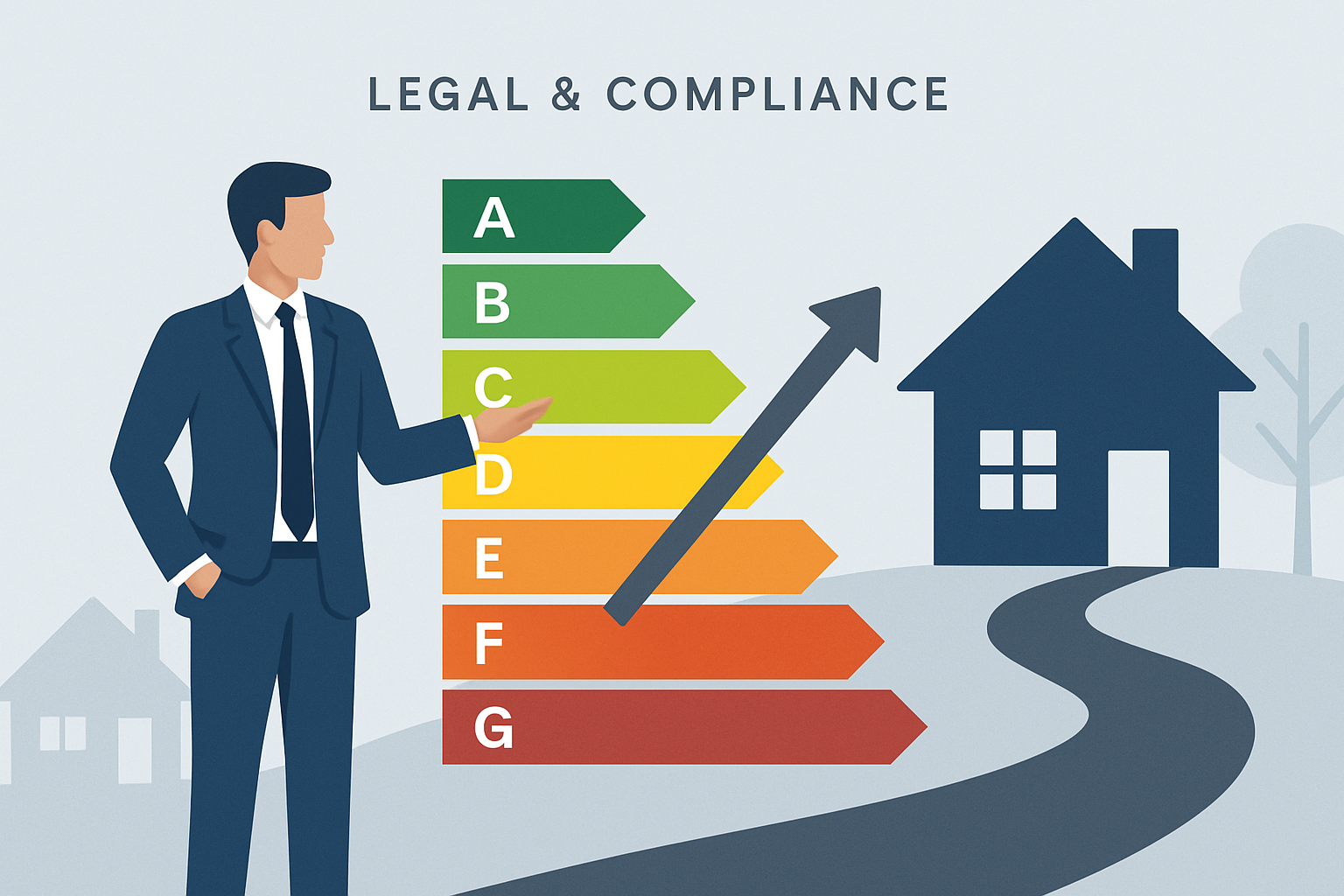
EPC ratings for rental property and the road to Band C
In England the current minimum EPC for most private rentals is Band E; government policy confirms a move to Band C by 1 October 2030 for the private rented sector.

Student HMOs and Ground 4A: getting the house back between years
Ground 4A gives student HMO landlords a student-specific possession route for the academic window (1 June–30 September), but it is subject to statutory conditions and no settled court guidance yet.

Section 24: how the mortgage interest restriction hits your bill
Clear, practical answers for England landlords: how Section 24 changes mortgage interest relief, what happens if Section 20 consultation is missed, and when costs can be passed to tenants.

Rental property tax deductions, line by line
A plain-English, England-only guide to the expenses landlords can deduct from rental income and which costs are treated as capital, with an itemised list you can use for Self Assessment.

Heat pumps in rentals: grants, ECO4 and who benefits
Practical answers for landlords in England on grant-funded heat pumps: who is liable for higher bills, how EPCs can move the wrong way, rent recovery and what rules do — and don't — exist.

Releasing equity from a rental without selling it
You can sometimes raise cash without selling, but a product transfer often won’t release equity; check your lender’s buy‑to‑let transfer and further‑advance terms first. In England.

PAT testing vs EICR: what a landlord is actually required to do
In England PAT testing is not a blanket legal duty for private landlords — electrical safety and a 5-year EICR obligation are the published rules, with PAT used as a risk control.

Which rental property expenses are tax deductible
A clear England-focused guide to which rental costs you can deduct from taxable rental income, what counts as capital, and a few common pitfalls landlords make.

Reporting to landlord clients: what software actually does it
What property-management software actually produces for landlords in England: legal limits, the records you must keep, what conveyancers publish, CGT timings, EICRs, HMO reporting and common accounting traps.

Property management software with a tenant and landlord portal
Compare how landlord portals work in UK property management software, what they must support for compliance in England, and which products suit small landlords versus block managers.

Limited company or personal name: how to hold a rental
Practical answers for English landlords on signing tenancies, tax, personal exposure and company control when a rental is held in a limited company.

UK property management software compared for landlords
Compare landlord software, apps and full-service options for England landlords: features, prices and the legal checks (holding deposit cap, deposit workflows, inspections).

Capital gains tax when selling a rental, and when to sell
Should you sell a buy-to-let before the Budget? Practical answers on whether timing helps, which rates apply to individuals vs companies, and how to calculate the gain.

End-of-tenancy cleaning: what a landlord can lawfully deduct
What landlords in England can legally deduct from a tenant’s deposit for end‑of‑tenancy cleaning, what evidence you need, and how disputes and partial payouts work.
Landlord software compared: what actually fits a small portfolio
Clear, practical picks for England-only landlords managing small portfolios — which product fits one property, three, or ten, and when to choose an agent-focused tool instead.

Freehold flats, Section 5B notices and buying your freeholder out
What a Section 5B auction notice means, what you can do with 86 years left, deposits when you buy with sitting tenants, whether a freehold flat is legitimate, and how fixing vs staying on a tracker affects selling.

DPS, TDS and MyDeposits: the three schemes compared
In England, landlords must protect tenancy deposits in one of three approved schemes (DPS, TDS or MyDeposits) within 30 days. This guide explains what each name means and how to check protection.

Section 8 explained, now it is the only route to possession
In England, Section 8 (Housing Act 1988) is now the statutory, grounds‑based route to possession; Section 21 has been abolished for assured shorthold tenancies.

Custodial vs insured deposit protection compared
Clear differences: custodial schemes hold the cash and are usually free; insured schemes let the landlord hold the cash but charge a fee. Both must be used and prescribed information given within 30 days in England.

Gas safety certificates: penalties, prison and the rules landlords miss
Clear answers for landlords in England on whether missing a gas safety certificate can mean fines or prison, who’s legally liable and the compliance steps to avoid penalties.

Landlord EICR requirements: when you need one and who can issue it
Practical guide for landlords in England on when you must have an EICR, who can issue it, deadlines and how to track and fix faults.

What landlords can claim as expenses, and what gets rejected
A practical guide for landlords in England on which rental expenses you can claim, the £1,000 property allowance, replacement relief and what HMRC rejects.

Deposits when a letting agency closes or is replaced
If your lettings arm closes in England, deposits must remain protected: return them or transfer protection so they can be returned, with undisputed sums normally repaid within 10 days.

HMO insurance: why a standard landlord policy is not enough
Standard buy‑to‑let policies usually won’t cover a property let by the room; HMOs, short‑term lets and lodgings need specialist cover, tenant contents remain tenants’ responsibility, and rent‑guarantee is a separate add‑on.

EPC for landlords: the definitive UK legal guide (2026–2030)
Everything UK landlords need on EPCs: the minimum E rating, the confirmed EPC C by 2030 deadline, certificate costs, MEES penalties, exemptions and a step-by-step compliance process.

UK rental market 2026: the trends every landlord must track
A practical look at the UK rental market 2026: demand, rents, regulation, and what to do now to protect yield and reduce voids.

Deposit protection scheme comparison: DPS vs MyDeposits vs TDS
A practical deposit protection scheme comparison of DPS, MyDeposits and TDS: custodial vs insured, fees, dispute resolution, and what to choose.

Smoke alarm regulations rental property 2026: landlord checklist
A scannable 2026 checklist for smoke and carbon monoxide alarms: placement, testing, records, penalties, and what to do if alarms fail.

Best Property Management Software for UK Landlords in 2026: An Honest Comparison
We compare the 10 property management software tools UK landlords shortlist in 2026 — real pricing from live pricing pages, MTD quarterly-filing status for each, and one honest weakness per tool (including our own).

Landlord tax deductions UK: complete allowable expenses list
A step-by-step guide to landlord tax deductions UK: allowable expenses, mortgage interest tax relief, repairs, insurance, travel and fees.

Right to rent check 2026: step-by-step checks, docs & penalties
A practical right to rent check 2026 guide: documents, Home Office online check, follow-up checks, and the penalties for getting it wrong.

energy efficiency regulations rental 2026: EPC C, costs & exemptions
A practical legal guide to EPC C proposals, MEES compliance steps, likely timelines, typical upgrade costs and how EPC exemptions work.
Electrical safety certificate rental property: EICR rules for landlords
A practical legal guide to EICR rules: when you need an electrical safety certificate, typical costs, who can do it, and what happens if you fail.

Gas safety certificate landlord obligations: CP12 checklist
A practical checklist for gas safety certificate landlord obligations: CP12s, annual checks, Gas Safe engineers, tenant rights and penalties.

Landlord insurance what does it cover? Essential vs optional
A clear comparison of landlord insurance types: what’s essential, what’s optional, and how to choose the right cover for your rental.

Renters Reform Bill 2026: what landlords need to know now
A clear, forward-looking update on the Renters Reform Bill: abolition of section 21, new eviction grounds, the landlord portal and tribunal changes.

Boiler broken in rental property who pays? UK landlord vs tenant
Clear UK guide on boiler responsibility, emergency timelines, legal duties and what to do next when heating or hot water fails.

Landlord responsibilities UK: complete legal checklist
A practical, checkbox-style guide to landlord responsibilities UK: safety certificates, repairs, deposits, right to rent and licensing.

Tenant Complaints Procedure: A UK Landlord Framework That Works
A practical tenant complaints procedure for UK rentals: timelines, evidence, escalation steps, and a repeatable framework to resolve issues before disputes.

Rental Inspection Checklist: Mid-Tenancy Inspections UK
A practical rental inspection checklist for UK mid-tenancy visits: how often to inspect, what to check room-by-room, and how to document issues legally.

Tenant Check Out: Step-by-Step Move-Out Inspection Guide
A practical tenant check out guide for UK landlords: inventories, evidence, fair deposit deductions, and dispute-proof check-outs.

Tenant rent arrears: a landlord framework to recover rent fast
A step-by-step framework to handle tenant rent arrears: reminders, repayment plans, and legal escalation without wrecking the tenancy.

Tenancy agreement: how to write one that protects landlords
A step-by-step guide to drafting a tenancy agreement that’s enforceable, compliant, and reduces disputes from day one.

Managing multiple properties: DIY tools vs letting agents
A practical, balanced comparison for landlords handling several homes — weighing DIY property management software and tools against traditional letting agents.

Tenant screening: a step-by-step UK landlord guide
A practical, legal UK guide to tenant screening: checks, questions, references and red flags—so you choose the right tenant with confidence.

Buy to let tax 2026/27: allowances, rates and landlord numbers
A data-led look at buy to let tax in 2026/27: income tax bands, CGT, allowances, year-on-year comparisons and what it means for your net yield.

EPC exemptions for landlords: complete legal guide
A clear legal guide to EPC exemptions for landlords: types, evidence, the PRS Exemptions Register, five‑year duration and how to comply with MEES exemptions.

Landlord Maintenance Checklist: A Complete Routine for Rentals
A practical landlord maintenance checklist with priorities, frequencies, and clear actions to keep your rental safe, compliant, and profitable.

EPC grants for landlords: UK funding schemes step-by-step
A step-by-step guide to EPC grants for landlords: ECO4, Boiler Upgrade Scheme, Great British Insulation Scheme and local LAD/HUG funding.

AI Property Management in 2026: What UK Landlords Are Doing Now
A practical 2026 trend analysis of AI property management in the UK: adoption stats, real use cases, risks, and steps you can take this year.

Tenant deposit dispute: how to resolve it legally in England & Wales
A practical legal guide to handling a tenant deposit dispute, from evidence and deadlines to ADR and court options in England and Wales.

Section 21 notice vs Section 8: UK eviction rules for 2026
A practical 2026 guide to Section 21 and Section 8 notices: legal rules, documents, timelines, common mistakes and what reforms may change next.

House in Multiple Occupation Licence: UK HMO Licensing Guide
A practical UK legal guide to the house in multiple occupation licence: mandatory vs additional schemes, applications, conditions, and penalties.

End of tenancy cleaning responsibility UK: who pays and what’s fair?
A legal guide to end of tenancy cleaning responsibility UK: professional clean clauses, fair wear and tear, deposit deductions, and TDS disputes.

Letting agent fees vs self managing: full cost comparison
A balanced, numbers-led comparison of letting agent fees vs self managing, including time, risks, and when each option makes sense.

Mould and damp in a rental property: whose responsibility, and how to fix it (UK)
Who's responsible for mould in a rental property - landlord or tenant? A UK guide to Awaab's Law, Homes Act 2018 duties, and the fixes that stop damp for good.

Tenant Abandonment UK: A Step-by-Step Legal Guide for Landlords
Handle tenant abandonment legally in the UK: evidence, notices, safe re-entry, and re-letting without risking an unlawful eviction claim.