
EPC for landlords: the UK legal guide, 2026 to 2030
Everything UK landlords need on EPCs: the minimum E rating, the confirmed EPC C by 2030 deadline, certificate costs, MEES penalties, exemptions and a step-by-step compliance process.
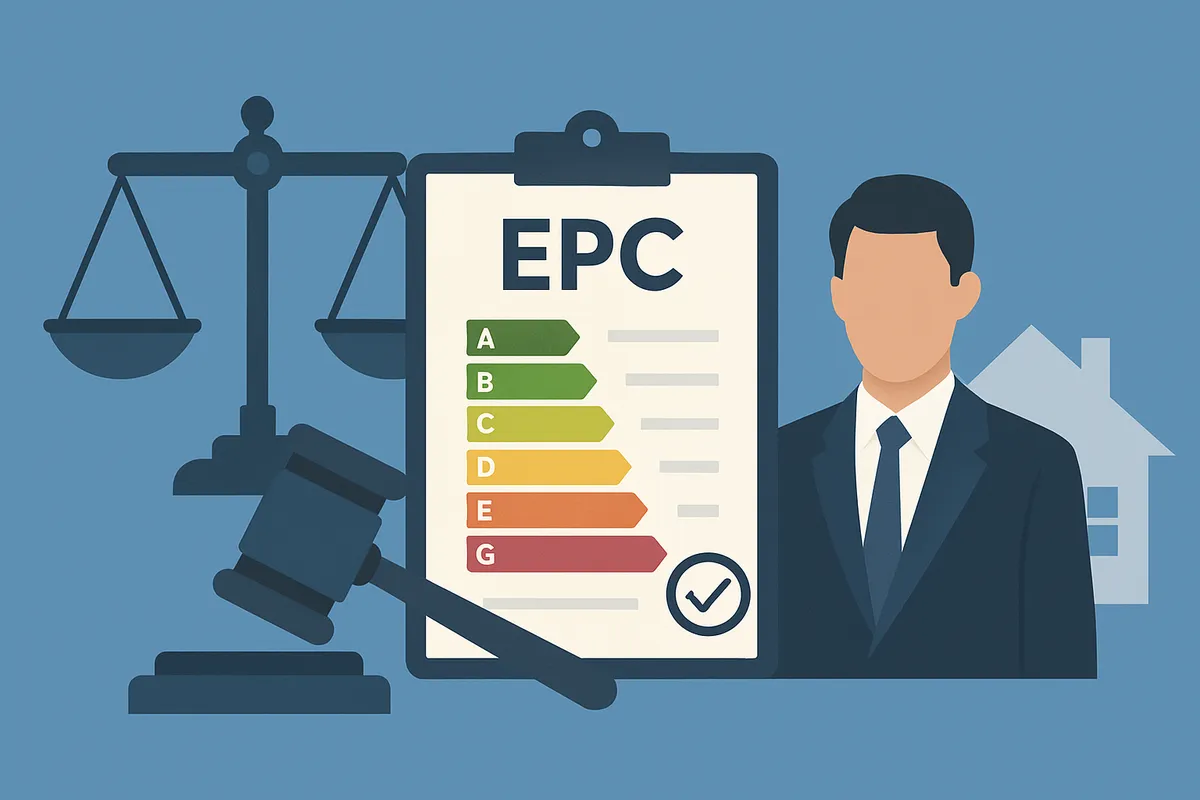
An EPC for landlords is not optional admin. It's a legal requirement for marketing and letting most rental homes, and it sits at the centre of the Minimum Energy Efficiency Standards (MEES) rules that decide whether you can lawfully grant a tenancy at all.
Automated property management for UK landlords & property managers
3 months free — no agent fees
This definitive guide explains what an EPC is, the minimum EPC rating to rent right now (E), what the confirmed move to EPC C by 2030 means in practice, how to get and renew certificates, what happens if your property is rated F or G, and the penalties if you get it wrong. If you want a fast, personalised read on where your property stands, check your property with our interactive EPC guide.
What an EPC is — and the law behind it
An Energy Performance Certificate (EPC) is a standardised energy efficiency report for a building. It shows:
- An energy efficiency rating from A (best) to G (worst)
- Estimated energy costs
- A list of recommended improvements and the potential rating uplift
For landlords, the EPC is a legal document that affects:
- Whether you can market and grant a tenancy
- Whether the property meets MEES regulations
- Tenant decision-making (and increasingly, rent levels and void periods)
Two main legal frameworks sit behind EPC compliance for rentals in England and Wales:
- The Energy Performance of Buildings (England and Wales) Regulations 2012 (SI 2012/3118) — sets the EPC regime: when you need an EPC, how it must be provided to tenants, and how the rating must be displayed in marketing.
- The Energy Efficiency (Private Rented Property) (England and Wales) Regulations 2015 (SI 2015/962) — the core MEES regulations, which make it unlawful to let sub-standard properties unless a valid exemption is registered.
If you're looking for the rules that bite day-to-day, it's the MEES regulations: they set the minimum EPC rating for rental property you're allowed to let. Scotland and Northern Ireland have equivalent EPC regulations but different systems and timetables — check the rules where your property is located.
Why this matters in practice:
- You can be barred from letting a property that falls below MEES.
- Civil penalties can be significant (details below).
- EPC and MEES failures often surface during refinancing, sales, licensing checks, and tenant complaints — exactly when you least want a compliance fire.
Who landlord EPC requirements apply to
MEES applies to most privately rented domestic property in England and Wales let on:
- Assured shorthold tenancies (ASTs)
- Assured tenancies
- Regulated tenancies
- Certain domestic agricultural tenancies
It generally applies where the property is required to have an EPC and is let (or being let) under a qualifying tenancy. You should assume you need an EPC if you are granting a new tenancy (including renewals in many situations), marketing a property to let, or letting a self-contained flat or house.
Common situations to pay attention to:
- Letting agents: you're still legally responsible even if an agent handles the marketing.
- HMOs: the building's EPC position depends on whether it's let as a single dwelling or by individual rooms. You still often need an EPC for the building — don't assume "HMO" means "no EPC".
- Company lets: EPC and MEES can still apply depending on the nature of the letting.
- Listed buildings: some may be exempt from EPC requirements where compliance would unacceptably alter their character — but this is fact-specific, and "listed" does not automatically mean "exempt".
- Very short lets and some holiday accommodation: MEES may not bite in the same way depending on how the arrangement is set up.
Don't confuse "EPC not required" with "MEES doesn't apply". The starting point is always: does the property require an EPC?
EPC bands explained: what each rating means in practice
An EPC rates a property from A (best) to G (worst) based on modelled energy costs and carbon impact. Here's what the bands typically signal:
- A–B: very efficient (often newer builds, high insulation levels, heat pumps or solar, excellent glazing)
- C: good efficiency — often achievable through insulation upgrades, heating controls, and targeted improvements
- D: middling performance, common in many UK rentals
- E: the current legal floor for most rentals under MEES
- F–G: poor performance; triggers MEES restrictions and upgrade or exemption action
Two practical points landlords miss:
- EPCs are asset ratings (modelled), not your tenant's actual bills.
- Small changes — lighting type, heating controls, insulation evidence — can shift a band if properly evidenced to the assessor.
Minimum EPC rating to rent: the standard today is E
Right now in England and Wales, the minimum standard under the MEES regulations is EPC rating E for most new and existing private tenancies. "Let" includes granting a new tenancy and, in many cases, continuing to let under an existing one — so MEES is not just a new-tenancy problem.
If your property is rated F or G, you must not grant a tenancy or continue letting unless:
- You improve it to at least E, or
- You have a valid exemption registered on the PRS Exemptions Register
So if you're asking "can I rent a property with EPC rating F?" — the general rule is no, not for a new tenancy and not for continuing to let where MEES applies, unless you have a valid, registered exemption. The same applies to G. Letting a sub-standard property without one exposes you to enforcement action and civil penalties.
Beyond the legal bar, an F or G rating can also block renewals and trip lender or insurer requirements — and improving efficiency reduces complaints about cold homes and can reduce condensation risk (with proper ventilation and maintenance).
Confirmed reform: EPC C by 1 October 2030
There is no single "EPC 2026 law" that changes the minimum rating this year. Instead, the government has confirmed the direction and the approach is now a single deadline:
- All in-scope tenancies must reach EPC C by 1 October 2030
- The legislation to raise MEES is targeted for 2027, with compliance required by 1 October 2030
Earlier proposals had discussed a two-stage timetable (EPC C for new tenancies by 2028, all tenancies by 2030). That staged approach has been superseded by the single 2030 deadline — but if you remember the 2028 date, the practical advice hasn't changed: start now.
Treat EPC C by 2030 as a confirmed deadline to plan for, because:
- Long lead times: some measures are disruptive (insulation, heating changes), and installers and assessors get booked up fast as deadlines loom
- Hard-to-treat stock: older terraces, solid-wall homes, and some flats need design-led solutions
- Budget smoothing: spreading works across voids reduces disruption and protects cashflow
A practical readiness plan: set an internal target of every unit at EPC C (or as close as reasonably achievable) well before 2030; tackle your worst performers first (F and G, then low E); align upgrades with natural lifecycle events like boiler replacements and roof works; and keep evidence — future standards often hinge on proof of what's already been done. For a deeper dive into the EPC C rules, likely costs and exemption routes, see: energy efficiency regulations rental 2026: EPC C, costs & exemptions.
Always check the latest government guidance on the minimum energy efficiency standard as statutory updates land, because timelines and details can change.
Your EPC duties when marketing and letting
Under the Energy Performance of Buildings (England and Wales) Regulations 2012:
- You must commission an EPC before marketing a property to let.
- You must make the EPC available to prospective tenants at the marketing stage.
- The EPC rating must appear in property adverts (online listings, particulars, etc.).
- You must provide the EPC to the tenant when the tenancy is granted.
Practical expectation: have the EPC ready at instruction stage, not after viewings start.
How to get an EPC: step-by-step
Getting an EPC certificate as a landlord is straightforward, but timing matters — especially for marketing.
- Check if a valid EPC already exists. Search the EPC register for England and Wales (or the relevant national register).
- Instruct an accredited Domestic Energy Assessor (DEA) from an approved accreditation scheme.
- Prepare the property for the assessment. Ensure access to lofts, boilers, meters, and key rooms, and gather documentation (boiler install and service info, insulation evidence). EPCs are evidence-driven: if the assessor can't see paperwork, they may assume a worse position.
- Receive the EPC and recommendations report. Keep a copy and note the rating and expiry date.
- Provide the EPC to tenants and prospective tenants at the right points in the letting process.
Validity and renewals
An EPC is generally valid for 10 years. You don't "renew" an EPC administratively — you commission a new assessment and a new certificate is issued.
Good practice for rentals: re-check the EPC before marketing, and re-assess after major works (insulation, glazing, heating) so your rating reflects the improvements. An EPC does not update itself.
Typical EPC costs
Pricing varies by location, property size, and assessor availability. Typical market ranges:
- £60–£120 for many flats and small houses
- £120–£200+ for larger homes or complex properties
If you manage multiple units, assessors may offer portfolio pricing.
If you're below the minimum: a compliance process that holds up
If your EPC is F or G — or you're at E and planning for the move to C — treat it like a compliance project with a paper trail.
1) Audit your portfolio
Create a simple register for every unit:
- EPC rating and expiry date
- Property type (flat/house), age, construction type
- Main heating system and controls
- Insulation status (loft, cavity, solid wall)
- Any existing exemptions and their expiry dates
For a quick per-property baseline across EPC, gas, electrical and alarm duties, try our free compliance checker.
2) Confirm each EPC is valid and accurate
Before spending money, check the EPC is in date, reflects the property as it is now (e.g. insulation added since issue), and that you hold evidence for past improvements (invoices, photos, certificates). If it's outdated or wrong, commission a new assessment first — you may already be higher than the certificate says.
3) Read the recommendations like a business case, not a shopping list
EPC recommendations vary in quality. Prioritise measures that move the rating fastest, are low-disruption between tenancies, and don't create unintended issues (efficiency works without ventilation planning can worsen condensation — see our guide to damp and mould responsibilities).
4) Get quotes and sequence works sensibly
A simple approach that avoids chaos:
- List the top measures by impact and practicality, and get at least two quotes per measure
- Start with draught-proofing and basic fabric improvements
- Then heating controls
- Then insulation (loft/cavity)
- Then heating system upgrades, and renewables where suitable
Sequencing matters because some upgrades only deliver their full rating benefit after fabric measures are in place. Bundle works into one visit where possible, and schedule between tenancies or with clear tenant communication and access arrangements.
5) Complete the works and keep a compliance pack
Keep contractor quotes and invoices, product specs (insulation depth, boiler efficiency), Building Control sign-off where required, and before/after photos. A dry but true rule: if you can't prove it, it didn't happen. A simple compliance pack saves you when enforcement, licensing, or a sale happens.
6) Re-assess and obtain an updated EPC
After works, commission a new EPC so the improved band is recorded, then update adverts and letting packs and diarise the forward expiry dates.
Exemptions: when you can still let below the minimum
If your property genuinely cannot reach the minimum standard, you may be able to register an exemption on the PRS Exemptions Register. The main categories cover situations where all relevant improvements have been made but the property still falls short, where improvement costs exceed the permitted cap, where a required third party (freeholder, superior landlord, planning authority, or tenant) refuses consent, where a surveyor confirms works would devalue the property beyond the allowed threshold, and certain temporary situations such as recently becoming a landlord.
Three things to know before relying on one: exemptions are time-limited (typically five years, depending on the category), they must be properly registered with evidence — they are never automatic — and registering the wrong exemption or letting it lapse puts you straight back in breach. For the full eligibility rules, evidence requirements, and registration walkthrough, see our dedicated guide: EPC exemptions for landlords.
Funding help for upgrades
If the route to E (or C) involves significant works — insulation, heating upgrades, renewables — you may not have to fund everything yourself. Several government-backed schemes support energy efficiency improvements in rented homes, each with its own eligibility rules. For a step-by-step tour of what's available and how to apply, see: EPC grants for landlords.
Penalties: what non-compliance actually costs
There are two enforcement angles — EPC rules (having and providing the certificate) and MEES rules (the minimum rating) — and the figures apply per property.
EPC enforcement (certificate availability and provision)
Under the 2012 regulations, Trading Standards can issue penalties if you fail to make an EPC available when required. The standard penalty for a domestic property is £200, though penalties for breaches of the EPC regime can reach up to £5,000 depending on the breach.
MEES enforcement (letting a sub-standard property)
Local authorities enforce MEES, and for domestic private rented property civil penalties can be:
- Up to £2,000 for letting a sub-standard property for less than 3 months
- Up to £4,000 for letting a sub-standard property for 3 months or more
- Up to £1,000 for providing false or misleading information on the exemptions register
- Up to £2,000 for failing to comply with a compliance notice
On top of the financial penalties, authorities can impose a publication penalty — details of your breach can be published on the PRS Exemptions Register. Enforcement is not theoretical: councils increasingly use data to identify non-compliant lets, and MEES enforcement has become more active in many areas.
How to improve a poor EPC rating
If your rating is F or G, you're usually choosing between upgrades and an exemption. If you're sitting at E or D, plan ahead for the move to C.
Fast improvements that often move the needle
- Loft insulation (where suitable and currently thin or absent)
- Hot water cylinder insulation (jackets and pipe lagging)
- LED lighting throughout
- Draught-proofing (appropriate to the building — avoid trapping moisture)
Higher-impact upgrades (more cost, more uplift)
- Upgrading heating controls (programmer, room thermostat, TRVs, smart controls)
- Replacing an old boiler with a modern efficient model
- Cavity wall insulation (where appropriate)
- Double or secondary glazing (depending on the building)
- Renewables (e.g. solar PV) where viable
For harder-to-treat homes — solid walls, listed buildings — you'll need a more tailored, design-led plan.
Two practical tips landlords overlook: assessors score on evidence, so keep invoices, specs, and photos for everything you install; and don't "improve" ventilation out of existence — energy efficiency upgrades that worsen damp risk create a different legal problem.
Common EPC compliance mistakes
Most EPC failures aren't dramatic — they're admin and timing errors:
- Marketing without a valid EPC (or without the rating displayed) — a basic breach that's easy for councils to spot
- Relying on an old or expired EPC that doesn't reflect upgrades — you either overpay for unnecessary works or fail MEES for lack of evidence
- Doing expensive measures first (like replacing windows) before low-cost rating movers (controls, insulation)
- Doing works with no evidence — assessors need proof, and so do councils
- Letting an F/G property while "planning works" but without a registered exemption — MEES is about not letting below the minimum unless exempt
- Assuming exemptions are automatic, or registering one without the right evidence, or letting it expire
- Ignoring leasehold constraints — you may need freeholder consent for key measures, so build that lead time in
- Confusing the EPC with other certificates (EICR, Gas Safety, etc.)
If you want the wider compliance view across certificates and recurring duties, keep this bookmarked: Landlord responsibilities UK: complete legal checklist.
The wider direction of travel
The policy direction is consistently towards higher minimum standards and more scrutiny of property condition. Wider rental reform — including the Renters' Rights Act 2025 — increases attention on condition and management standards generally (see: what landlords need to know now). If you manage a portfolio, the smart play is to treat EPC improvements as a rolling programme aligned to voids and planned maintenance — capex you plan, like kitchens and boilers, not a panic purchase.
Streamlining EPC compliance with AI (without losing the paper trail)
EPC compliance is half improvements and half admin: chasing certificates and expiry dates, booking assessors, coordinating contractors, keeping tenants informed about access, and holding exemption evidence together. It's exactly the sort of work that gets missed when you're busy putting out other fires.
Abodient centralises your property compliance information, prompts you before key dates, and automates tenant communications around access and appointments — so your EPC workflow runs as a controlled process rather than a last-minute scramble, without living in spreadsheets.
Frequently Asked Questions
What is the minimum EPC rating to rent in the UK?
In England and Wales, the minimum EPC rating to rent under the MEES regulations is currently E for most private rented homes, unless a valid exemption is registered. Scotland and Northern Ireland have different systems and timetables — check the rules where your property is located.
Can I rent out a property with an EPC rating of F or G?
Not lawfully in most cases in England and Wales — not for a new tenancy, and not for continuing to let where MEES applies — unless you improve the property to at least E or register a valid exemption on the PRS Exemptions Register.
When does the minimum EPC rating change to C?
The minimum to let today remains E. The government has confirmed that rental properties must reach EPC C by 1 October 2030 for all in-scope tenancies, with the legislation to raise MEES targeted for 2027. Earlier proposals for a 2028 deadline for new tenancies have been superseded by the single 2030 date.
How long does an EPC last for a rental property?
An EPC is generally valid for 10 years. You can commission a new one sooner — especially after energy efficiency upgrades, so the improved rating is recorded.
How much does an EPC cost for landlords?
Typically £60–£200+, depending on property size, location, and assessor availability. Portfolio landlords may be able to negotiate multi-unit pricing.
Do I need a new EPC for every new tenant?
No. You need a valid EPC (within its 10-year life) and you must provide it at the correct points in the letting process. If the EPC has expired, you need a new assessment before letting.
Do I need a new EPC after making improvements?
Yes, if you want the improved rating recognised — an EPC does not update itself. Commission a new assessment and keep evidence of the works for the assessor.
Do the EPC rules apply to existing tenancies or only new lets?
MEES applies both to granting a new tenancy and to continuing to let a property, subject to the scope of the 2015 regulations and any registered exemptions.
You don't need to love EPCs. You just need to treat them like rent: non-negotiable, time-sensitive, and best handled before they become urgent.
