
EPC ratings and the road to Band C: UK 2026
In England the current minimum EPC for most private rentals is Band E; government policy confirms a move to Band C by 1 October 2030 for the private rented sector.
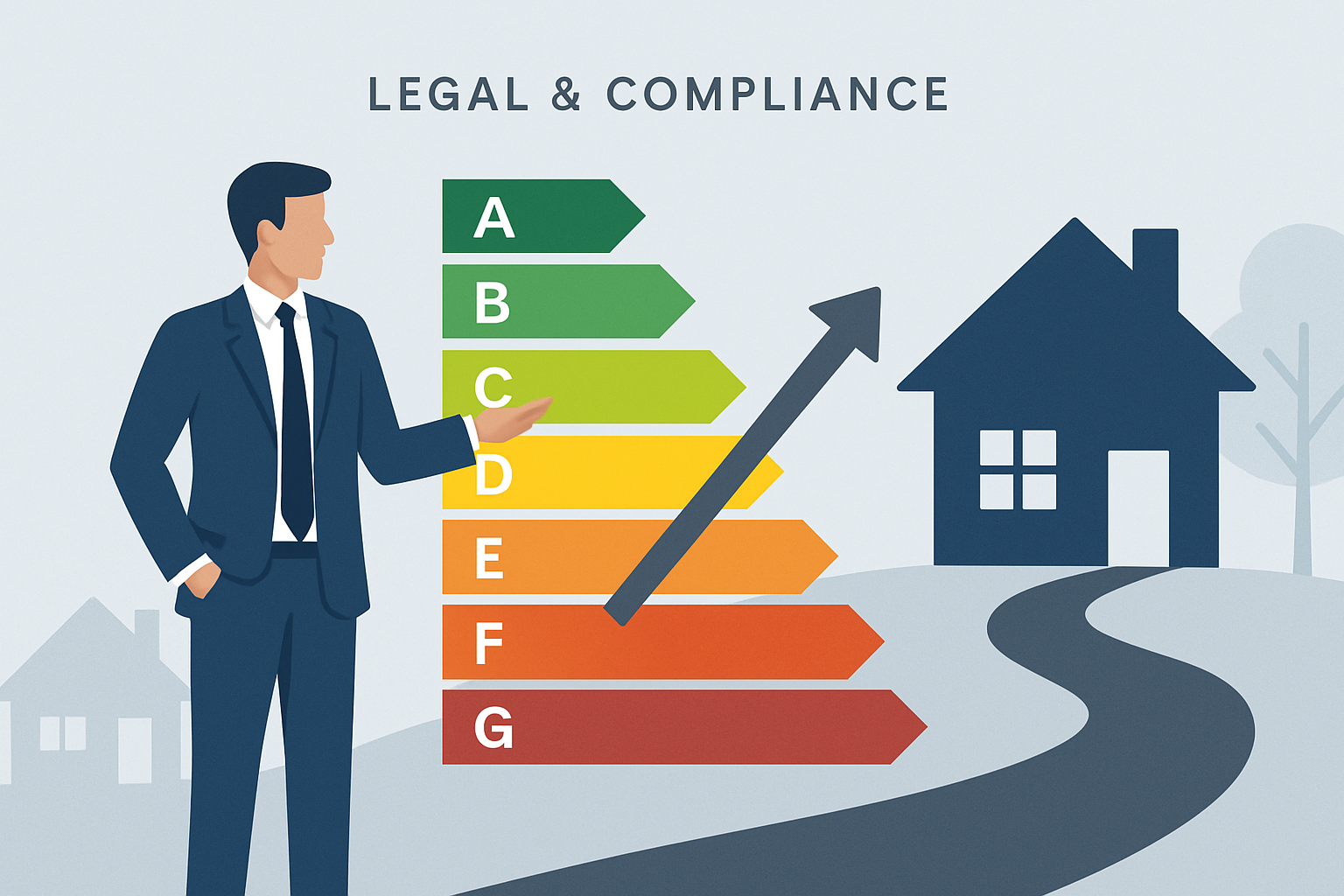
what is the epc rating for landlords
Current law in England requires most privately rented homes to meet at least EPC Band E now, and the government has confirmed a future requirement of Band C by 1 October 2030 if and when those regulations commence and subject to registered exemptions. I could not find a government or primary-source study in the supplied research that supports the specific claim that upgrading an A/B-rated home to C adds about 1.6% to sale price versus an identical D; third-party summaries sometimes repeat small-percentage figures but their methodologies and data sets vary and are not reproduced in the official guidance. You must hold and provide an EPC to prospective tenants, exemptions can be registered where they legitimately apply, and until the Band C rules commence the enforceable minimum for most lettings remains Band E.
epc rating for rental property
A rental property in England normally needs an EPC of E or above to be lawfully let, unless a valid exemption is registered. Landlords must make the EPC available free to prospective tenants and usually commission it before marketing; guidance expects "all reasonable efforts" to obtain it within seven days or, where that is impossible, within a further 21 days. Because an EPC can run for up to ten years, it is easy to lose track of exactly when one is due across a portfolio; Abodient tracks each property's EPC alongside its gas and electrical certificates and flags the renewal before it lapses.
epc rating for letting 2025
There is no England-wide legal minimum of EPC C in force in 2025 for ordinary private lettings; the current enforceable standard remains Band E while the government has confirmed a trajectory to Band C by 1 October 2030. Some third-party summaries mentioning a 2025 C rule refer to proposals or misreadings of the consultation material rather than the live law.
Which EPC improvements actually move a rental from a D rating to a C, and which ones are a waste of money?
There is no single guaranteed set of works that always moves a D to a C because the EPC score depends on the dwelling, the assessor inputs and the RdSAP/SAP model used; the government’s future approach is a dual-metric regime (fabric performance plus either a heating-system or smart-readiness route), so different mixes of measures can achieve C. In practice get a qualified assessor to model options for your exact dwelling, prioritise low-cost fabric fixes (loft insulation, draught-proofing, cylinder insulation) and targeted heating improvements, and be wary of expensive one-off works that an assessor’s model shows give little points gain for that property.
If tenants complain that a solid-wall house is too cold even with working double glazing and an EPC D rating, is a landlord expected to pay for interior or exterior wall insulation to fix it?
No — a landlord is not automatically required to install internal or external wall insulation simply because tenants say a solid-wall house feels cold; the legal benchmark is meeting the minimum EPC standard (currently E) and registered exemptions apply. That said, where the property fails the legal minimum or the tenancy agreement requires specific standards, landlords must act; otherwise consider targeted, proportionate works and discuss comfort issues with tenants rather than assuming an obligation to fund major insulation.
Do I need a completely new gas boiler to hit an EPC C rating, or are there cheaper wins first?
No — a brand-new gas boiler is not universally required to reach EPC C; the future standard allows different compliance paths (fabric improvements, heating upgrades or smart-readiness), so cheaper wins often exist depending on the property. Have an assessor model options: in many homes loft insulation, cylinder lagging, thermostatic radiator valves and boiler tuning or controls give good uplift before considering full boiler replacement.
Does external wall insulation I added to hit a better EPC rating make my rental property harder or more expensive to insure?
There is no published insurer rule or government figure saying external wall insulation automatically makes a rental harder or more expensive to insure. Because underwriting varies, tell your insurer in writing, get any required certification for the works, and secure a contractor warranty and fire-safety documentation — those steps are the normal way to avoid surprises with renewal pricing or cover conditions.
My ten-year EPC is up for renewal in a few months and I'm fairly sure it's going to drop from an E to an F even though I haven't changed anything about the property — why would a rating fall on reassessment alone, and what happens if it does?
An EPC can fall on reassessment because certificates reflect the assessment method and assumptions in force at the time, not just physical changes, and EPCs are valid for ten years. If a renewed EPC falls below the current legal minimum (E for most lettings) you could be unable to lawfully let the property unless you register a valid exemption or take works to raise the rating before re-marketing.
If two different accredited assessors rate the same unchanged property differently, is there a way to know which rating is more accurate, or is some level of assessor-to-assessor variation just normal and something I have to live with when I get a fresh certificate?
Some assessor-to-assessor variation is normal and there is no government-set numerical tolerance or single official rule that makes one certificate automatically "more accurate" in every case. If you get divergent results, ask each assessor to explain the inputs they used, check the data points that differ (heating type, insulation presence, window specification) and, if necessary, commission a third assessment or take photographic evidence of built features so the assessor can re-record them.
My EPC certificate lists a specific order of recommended improvements to reach a C, but is that the only way to get there, or could a completely different set of works get me the same points more cheaply?
No — the improvement list on an EPC is a recommended route from that assessor’s perspective, not a legal prescription; different measures can reach the same band because the scoring model awards points for a range of features. Use the EPC as a starting checklist, ask an assessor to model alternative packages, and consider which combination of fabric works, heating upgrades or smart measures gives the best cost-to-points ratio for your property.
My EPC assessor marked my property down because I couldn't produce old certificates for cavity wall insulation and window installation, even though the work is clearly visible — is there any way to prove retrofitted improvements without the original paperwork, or does missing documentation just permanently cap the score?
Missing historic paperwork does not automatically cap your EPC score; accredited assessors may rely on visible evidence, construction details and their professional judgement. To help an assessor, compile photos, invoices, manufacturer labels, installer details, planning notices or warranties; if those are unavailable an assessor can note visible insulation or window types and may accept that evidence rather than requiring the original certificate.
If I genuinely think my EPC assessor got the assessment wrong — misrecorded a heating type or missed visible insulation — is there an official route to challenge or appeal the certificate, or is my only option to pay for a completely fresh assessment and hope for a better result?
There is no clear published formal government appeal route that overturns an EPC on request; the practical remedy shown in public guidance is usually to ask the assessor to check the record and, if that fails, commission a fresh assessment. Start by raising the issue with the assessor and asking for a corrected report if there was a clerical error; if you still dispute the result, a new assessor can produce a second certificate that you can rely on going forward.
[Last reviewed August 2026.]
Automated property management for UK landlords & property managers
3 months free — no agent fees
